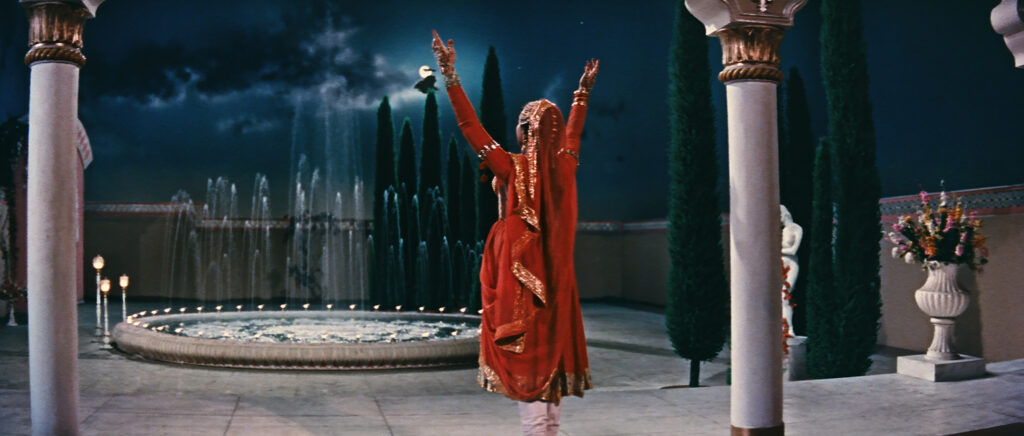


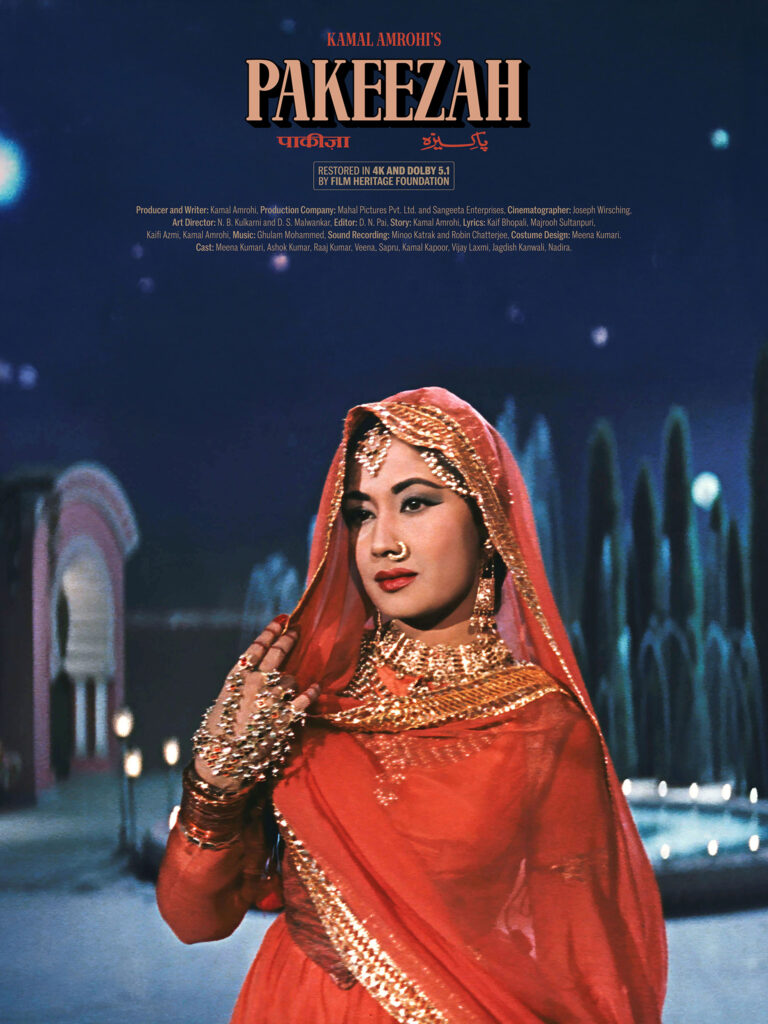
Film Heritage Foundation’s restoration of Kamal Amrohi’s landmark film “Pakeezah” in association with the Amrohi family is creating ripples around the world beginning with a world premiere at the prestigious Festival Lumière in Lyon, the birthplace of cinema, helmed by Thierry Fremaux, Director of the Festival Lumière as well as the Cannes Film Festival. The screening in France will be followed by the UK premiere at the London Film Festival at a gala screening at the BFI Imax.
The world premiere of Pakeezah will be the crowning achievement of an incredible year for Film Heritage Foundation restorations with premieres at every major international film festival this year beginning with Pradip Krishen and Arundhati Roy’s “In Which Annie Gives It Those Ones” (1989) at the Berlin International Film Festival followed by John Abraham’s Malayalam film “Amma Ariyan” (1986) at the Cannes Film Festival and Dev Benegal’s “English, August” (1994) at the Venice International Film Festival.
The film will be presented at its UK premiere in London by Shivendra Singh Dungarpur, Director, Film Heritage Foundation, Tajdar Amrohi and Rukhsaar Amrohi, the son and daughter of the director Kamal Amrohi, and extended members of the Amrohi family.
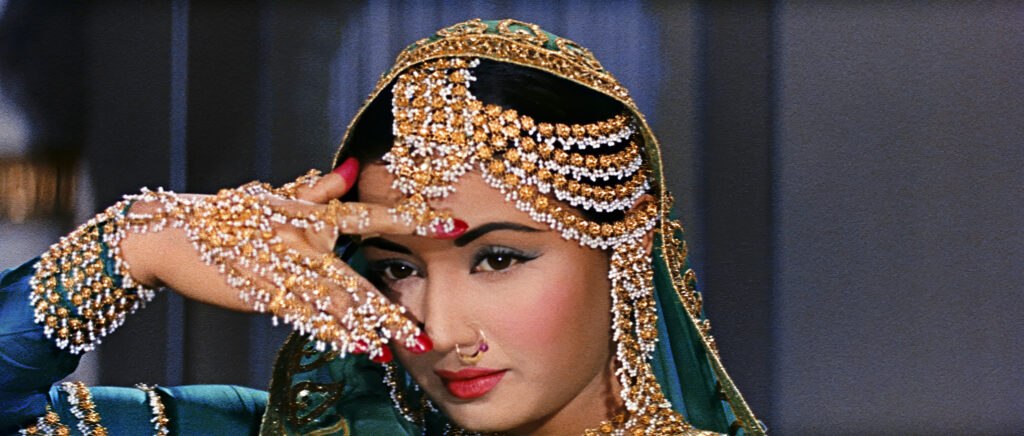
Pakeezah – a labour of love fifteen years in the making
Film critic Derek Malcolm described “Pakeezah” as one of the most extraordinary musical melodramas ever made.
The making of the film has all the romance, drama and heartbreak of the film itself. “Pakeezah” released on February 4, 1972 but it’s journey to the big screen was a painstaking journey of fifteen years from the time filming began in the mid – 1950s.
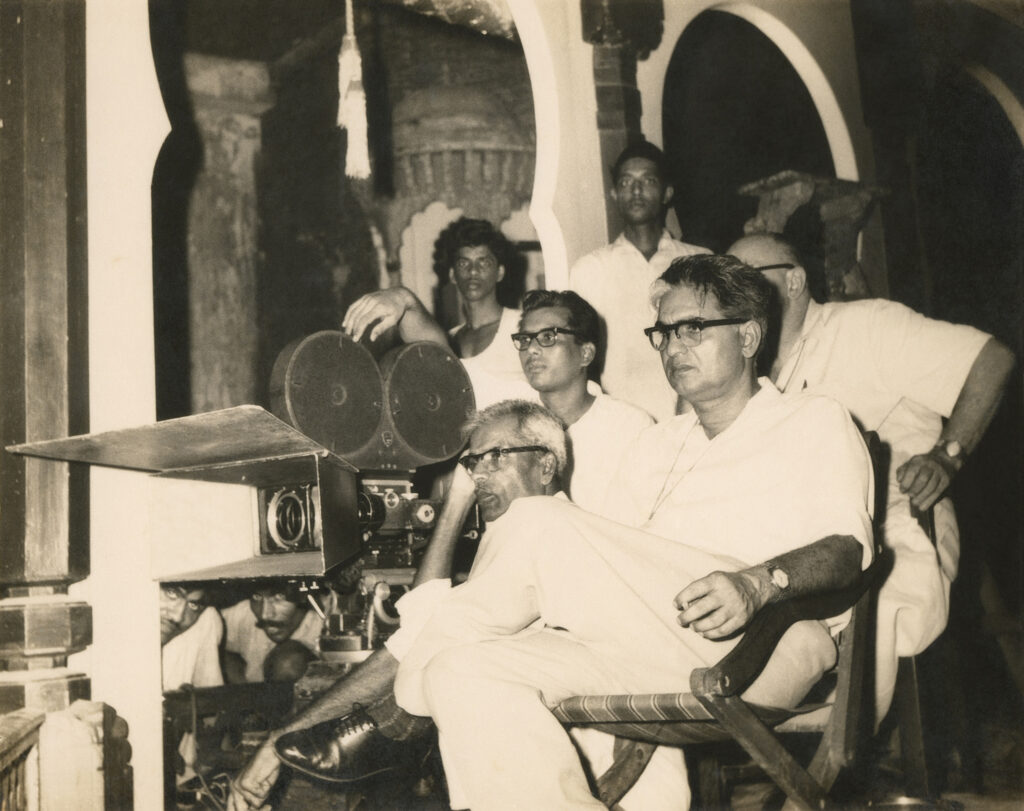
Kamal Amrohi wanted to make a film that was befitting the beauty of his wife Meena Kumari who was then a rising star. Amrohi began shooting the film in black and white in 1956 and then decided to shoot the film in Eastmancolor in 1958 supposedly at Meena Kumari’s suggestion. Principal photography of the film was begun by the German cinematographer Josef Wirsching. But over the next several years filming was sporadic with several casting changes, location hunting, script changes. They even lost part of the original negatives of the black and white version of the film in a studio fire.
Also Meena Kumari had become a huge star in the interim and had allocated dates to many films allowing her to be on the sets of Pakeezah for a few days every month. The film went overbudget due to the lavish sets and Kamal Amrohi’s perfectionism that would brook no errors and elongated shooting schedules. By 1964, the film was still incomplete and that year Kamal Amrohi and Meena Kumari separated due to personal differences dealing a further blow to the much-delayed production. Meena Kumari became an alcoholic and was diagnosed with cirrhosis of the liver in 1968 for which she travelled abroad for treatment several times. Pakeezah lay abandoned.
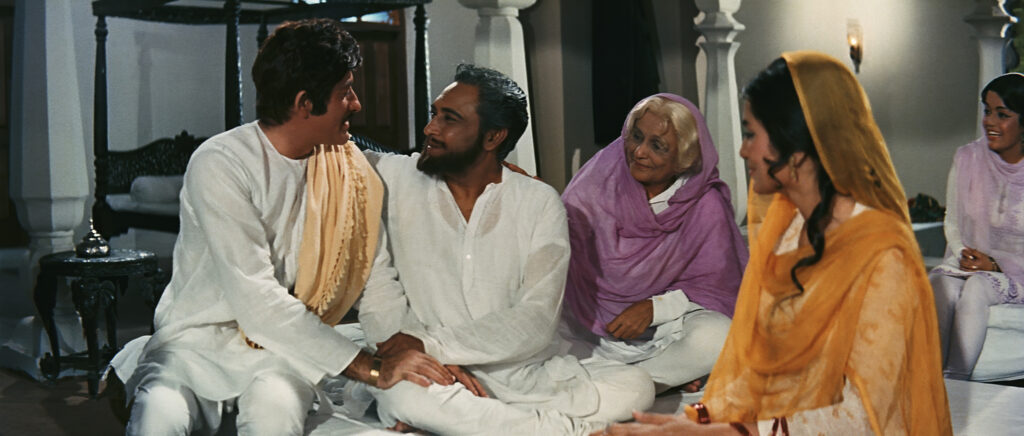
It was in 1969, that the actors Sunil Dutt and Nargis, close friends of Meena Kumari, after watching the rushes of the film, asked her not to leave the film unfinished. Meena Kumari agreed to return to the set and finally the film resumed shooting in 1969. She was much debilitated by illness, but determined to complete the film.
In the meantime, the cinematographer Josef Wirsching passed away in 1967 and a number of India’s leading cinematographers had to step in to complete the film. Maintaining the same look and feel of the film without Josef Wirsching and multiple cameramen working on the film was challenging. In 1968, the music composer Ghulam Mohammed passed away having composed the unforgettable songs of the film, but not having scored the background music or title sequence which was finally completed by Naushad.
The film, almost fifteen years in the making, was finally released in 1972, at a moment when cinema was moving away from the refined, Urdu-inflected literary style and studio aesthetic of the 1950s and 1960s toward more modern, urban, and action-oriented storytelling. Meena Kumari passed away on March 31, 1972, just a few weeks after the release of the film and the film went on to become a box office sensation.
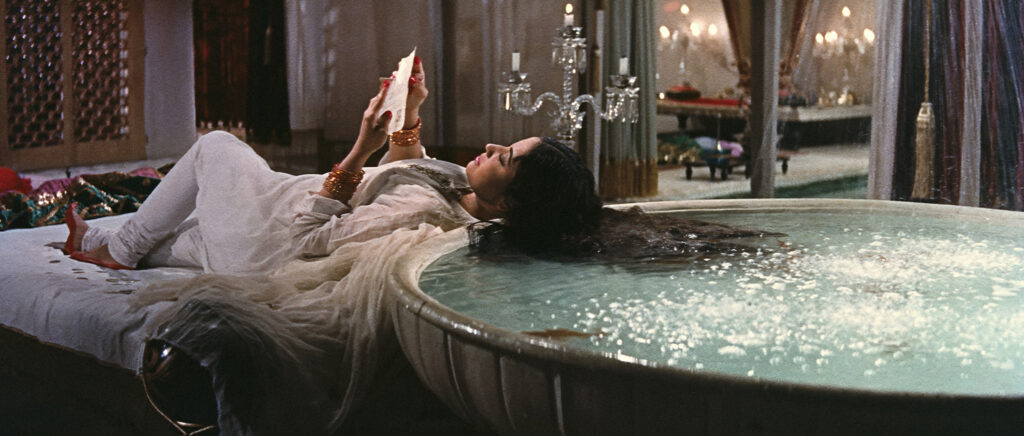
Pakeezah stands as one of the last great classical musicals of Indian cinema — a visually opulent and emotionally tragic masterpiece, a fusion of cinema and biography — where the actress’s real decline seems to echo the tragic destiny of the character herself.
MEENA KUMARI, (Star & Style, February 18, 1972):
“Pakeezah is the beloved, which has been born of this filmmaker’s imagination nearly two decades ago. ‘Pakeezah’ is the vision which has haunted his soul for as long as I can remember. . . I have lived with ‘Pakeezah’ almost as long as I have lived with its creator . . . For Kamal Saheb, the filmmaker, it was to be his life’s work, his raison d’etre. . .
It is no secret that in order to faithfully depict the incredible visual splendours of “Pakeezah” on celluloid the filmmaker has hovered time and again on the verge of financial disaster. Every penny he could muster, from any quarter whatsoever, has gone into “Pakeezah”. . .
For a period of time Kamal Saheb, “Pakeezah” and Meena Kumari – all ran into difficulties (of one nature or another). The emotional exhaustion it has left in its wake makes me want to gloss over this period when “Pakeezah” went into cold storage. It lasted for about four or five years.
But both of us went back eventually to “Pakeezah” and we finished this film together – he as its creator and I as its physical, spiritual and visual embodiment.”
ASHOK KUMAR (Star & Style, Feb 18, 1972):
“I have known about “Pakeezah” almost as long as Kamal Amrohi. I have been ‘in it’ almost since its inception. I have lived close to it, and to its maker, through all his and its travails, sufferings, longings and aspirations. “Pakeezah” to both Kamal Amrohi and myself, has been not merely the making of a film. It has been a way of life. It has been the sheet-anchor of Kamal Amrohi’s stake as a filmmaker, writer, poet and visionary.
“Pakeezah” has been a part of my professional life for more years than I care to count! It has kept me in touch with two of the biggest talents which the Indian screen will ever know – the poet-director Kamal Amrohi, and Meena Kumari, my co-star in “Pakeezah” and so many earlier films. She is, and will remain, probably the greatest artiste the Indian screen has ever known.
But for me, for Ashok Kumar, I think I will not be far wrong in summing up “Pakeezah” like this: It has been a fascinating parallel life; an exercise in maintaining and deepening human relationships; a living for part of the time in the world of feudal grandeur and its culture, traditions, ways of thought and life; it has been an enriching and rewarding experience – for, rarely can one say that one adds a vital dimension of one’s personality to a motion picture, or that a motion picture adds a vital dimension to one’s personality.”
SHIVENDRA SINGH DUNGARPUR, DIRECTOR, FILM HERITAGE FOUNDATION:
“Restoring Pakeezah has been a long-held dream and I am so grateful to Bilal Amrohi for being the moving spirit and encouraging the family to support the restoration and bring the film back to life.Pakeezah is a film that has been etched in my memory since I was a child when I watched it for the first time with my grandmother in a darkened cinema in Dumraon, Bihar.
The restoration of Pakeezah took two years. It has been one of the most exciting yet one of the most challenging restorations I have worked on. When I went to inspect the original camera negative and saw that it had almost melted, my heart sank. And the other film elements we had to work with were not in good condition with faded colours, scratches and mould. In my mind’s eye, I could see each frame like a painting saturated with colours, the opulent sets and the luminous beauty of Meena Kumari and the songs of Ghulam Mohammed were ringing in my ears as if it was yesterday, but not a single cast or crew member survived from the film and I wondered how I would be able to restore Kamal Amrohi’s original vision with what I had to work with. During our research we discovered original film stills which helped a great deal and I also consulted Tajdar and Rukhsaar Amrohi who had visited the sets and had vivid memories from the making of the film. I couldn’t have asked for a better showcase for the restored Pakeezah than the Festival Lumiere in Lyon, the birthplace of cinema followed by a gala screening at the London Film Festival.”
TAJDAR AMROHI, SON OF KAMAL AMROHI:
I was at the grand premiere of Pakeezah in 1972 with my father and Choti Ammi (Meena Kumari) and the film cans arrived at Maratha Mandir in a palanquin. I never imagined that I would be presenting the restored film with my family at the gala premiere in London fifty four years later.
I would like to thank Shivendra Singh Dungarpur and Film Heritage Foundation for restoring the film with so much passion and meticulous care and for bringing my father and his greatest work back to life so that new generations will see the unforgettable Meena Kumari and enjoy the beauty of the film.
I remember when I was a child, my father was deep into the making of Pakeezah. Everything in our lives revolved around Pakeezah. My father had put in everything he had in the film and whenever we asked him for anything as children, his response would always be, “After Pakeezah.” Pakeezah was his life’s mission. I have so many memories of the film as I would regularly visit the sets on Floor No. 3 at Filmistan where much of the film was shot. The film has influenced generations of filmmakers and even today I am sometimes asked how did he achieve some of the shots.
RUKHSAAR AMROHI, DAUGHTER OF KAMAL AMROHI:
“Pakeezah was my father’s obsession, his dream, his oxygen that gave meaning to his life. No one else could have played the role of Pakeezah, but Choti Ammi (Meena Kumari). She was Pakeezah.
My father nurtured the film for over fifteen years like a child till it was fully matured and ready to be presented to the world. As a thirteen-year-old, I witnessed the countless sacrifices my father made and the relentless dedication and perfectionism in the face of almost insurmountable challenges to make his vision a reality. I have preserved every bit of his legacy that remains in Amroha, but for years, I felt that my father’s legacy as a great master of cinema had been forgotten. I would like to thank Shivendra Singh Dungarpur for taking the initiative to restore Pakeezah with so much love and care. I only wish my father were alive to see his creation restored and reborn for the world to see fifty-four years after it released. I cannot wait to see the restored film back on the big screen and I will be travelling to London to present the film.”
THE RESTORATION PROCESS
Ever since I forayed into the world of film restoration, it has been my dream to restore Pakeezah. I approached the Amrohi family with a proposal to restore the film and was so pleased that they agreed. Pakeezah was a film that had been shot in spectacular cinemascope Kodak Eastmancolor, but all that remained for public viewing was poor quality Youtube versions with distorted colours. It was a travesty.
In 2024, we went to Ramnord Lab to check the negative of Pakeezah and found that it had almost melted and was unusable for the restoration. However, we found an interpositive (IP) and a cinemascope print at the lab that we collected. We discovered that the NFDC-National Film Archive of India had preserved a colour reversal internegative (CRI) which we could access for the restoration.
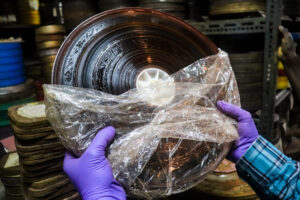
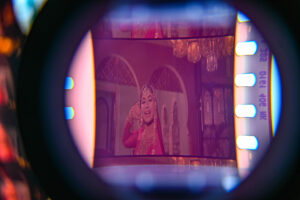
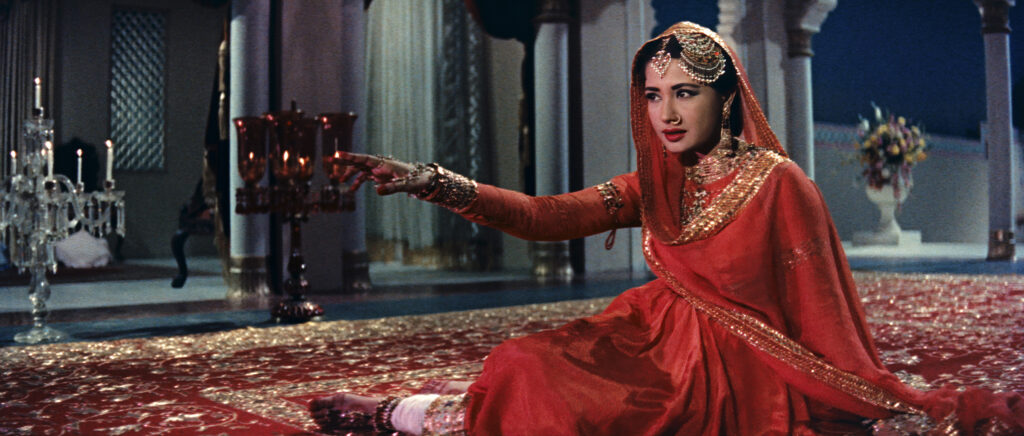
With no original camera negative and no surviving cast and crew of the film, ensuring that we matched the original colours of the film that had been so integral to Kamal Amrohi’s vision was a challenge. Through our research we were able to find original shooting stills of the film. We also regularly consulted with Tajdar and Rukhsaar Amrohi, the son and daughter of Kamal Amrohi, who had vivid memories of the film and had also been present during the shooting of the film. For instance, for the song “Inhi logon ne” we kept showing the images to Rukhsaar Amrohi to ensure that we got the colour of Meena Kumari’s costume absolutely right.
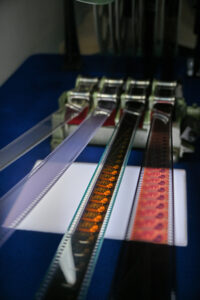
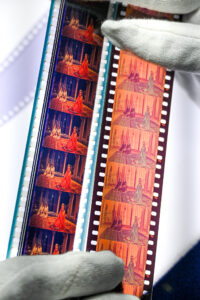
The film had been shot over fourteen years resulting in inconsistencies in the day for night sequences. The material we were working with resulted in several of the transitions being out of focus and the images were very grainy.
We found that the IP had scratches, mould, traces of halos and the emulsion and vinegar syndrome. The CRI had colour fading. The two elements presented different levels of conservation and image quality; the restoration aimed to eliminate colour fluctuations, mould, dirt, scratches and other defects, while ensuring visual consistency between the sources. The sound was restored in 5.1 using the sound negative and a release print.

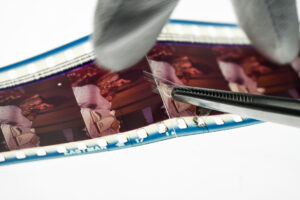
RESTORATION CREDITS
Tajdar Amrohi and Rukhsaar Amrohi present
Pakeezah restored in 4K by Film Heritage Foundation at L’Immagine Ritrovata laboratory in association with Bilal Amrohi of Lionheart Cinema.
Special thanks to Nasreen Munni Kabir.
No original camera negative of Pakeezah survives.
The film was restored from the interpositive (IP) preserved at Film Heritage Foundation and the colour reversal intermediate (CRI) preserved at NFDC – National Film Archive of India. The two elements presented different levels of conservation and image quality; the restoration aimed to eliminate colour fluctuations, mould, dirt, scratches and other defects, while ensuring visual consistency between the sources.
The sound was restored in 5.1 using the sound negative and a release print.
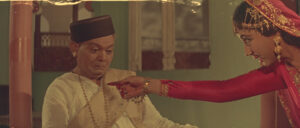
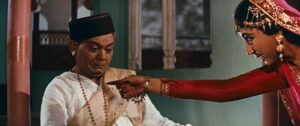
CAST AND CREW DETAILS
Pakeezah (The Pure One), India, 1972, Kamal Amrohi
153 mins, Colour, Urdu, English Subtitles, DCP, 4K, 2.35:1, 5.1 sound
Producer and Writer: Kamal Amrohi, Production Company: Mahal Pictures Pvt. Ltd. and Sangeeta Enterprises, Cinematographer: Joseph Wirsching, Art Director: N. B. Kulkarni and D. S. Malwankar, Editor: D. N. Pai, Story: Kamal Amrohi, Lyrics: Kaif Bhopali, Majrooh Sultanpuri, Kaifi Azmi, Kamal Amrohi, Music: Ghulam Mohammed, Sound Recording: Minoo Katrak and Robin Chatterjee, Costume Design: Meena Kumari.
Cast: Meena Kumari, Ashok Kumar, Raaj Kumar, Veena, Sapru, Kamal Kapoor, Vijay Laxmi, Jagdish Kanwali, Nadira.
SYNOPSIS
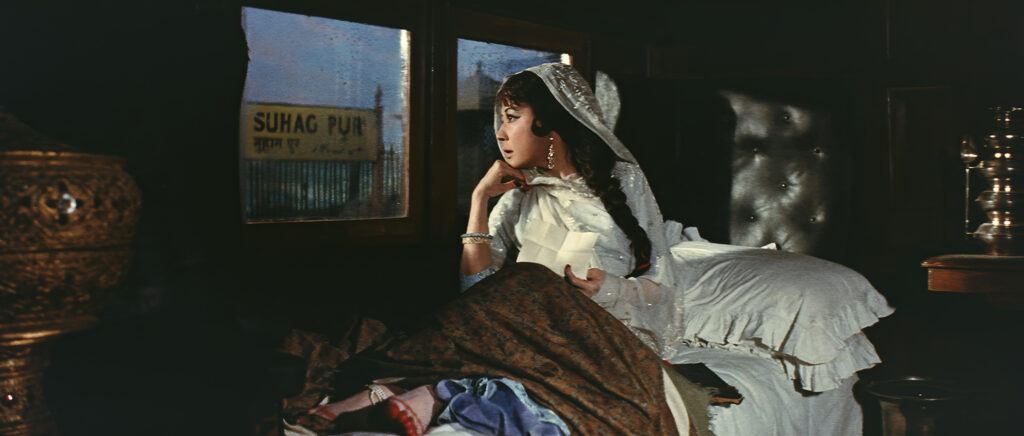
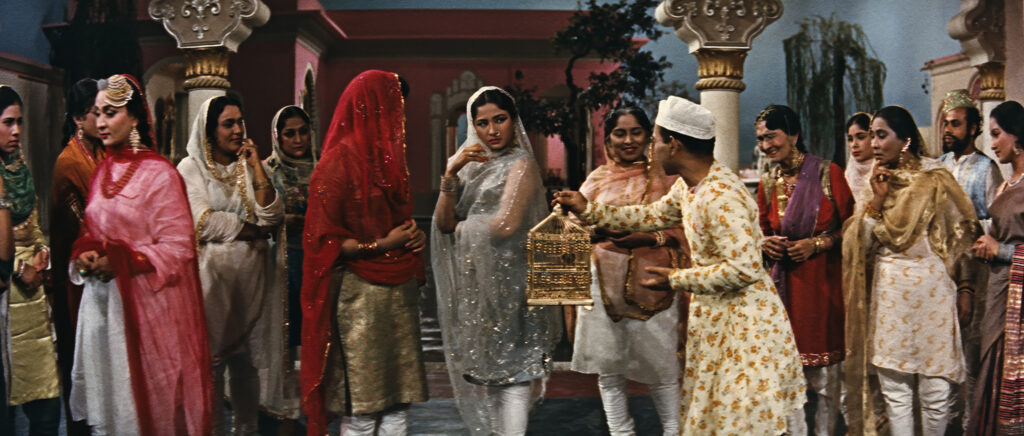
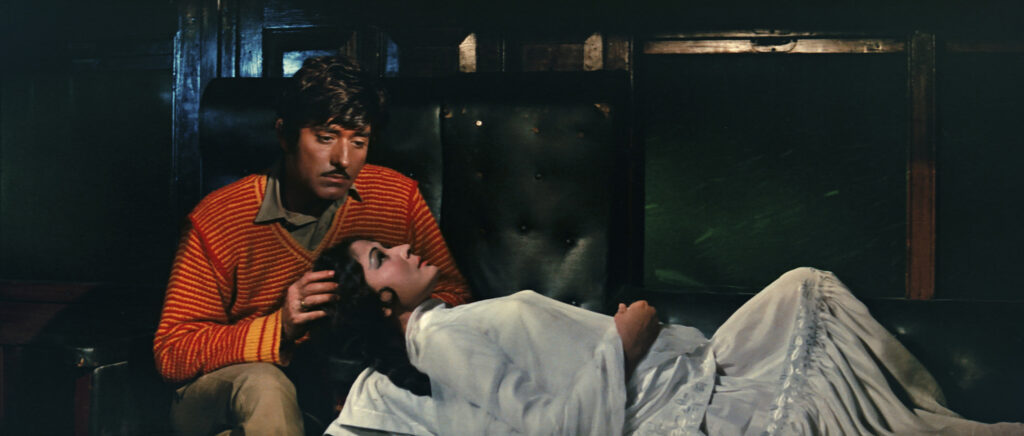
Set against the backdrop of the courtly era of the nawabs of Lucknow, Pakeezah with its painterly frames saturated with colour, opulent sets and costumes, haunting music and the luminous Meena Kumari in an unforgettable performance as the courtesan Sahibjaan, is a poetically exquisite classic that took fourteen years to complete. The courtesan Nargis is rejected by the family of her husband Shahabuddin and dies giving birth to her daughter Sahibjaan who grows up to become a renowned courtesan. But she lives in a gilded cage, yearning for love and a life of dignity. Her life takes a turn when a forest officer, Salim, accidentally encounters her while she is asleep in a train compartment. Captivated by her, he leaves behind a note praising her beauty and innocence without knowing her identity. Their paths cross again and they fall in love. However, misunderstandings and the stigma attached to Sahibjaan’s identity threaten to keep them apart.
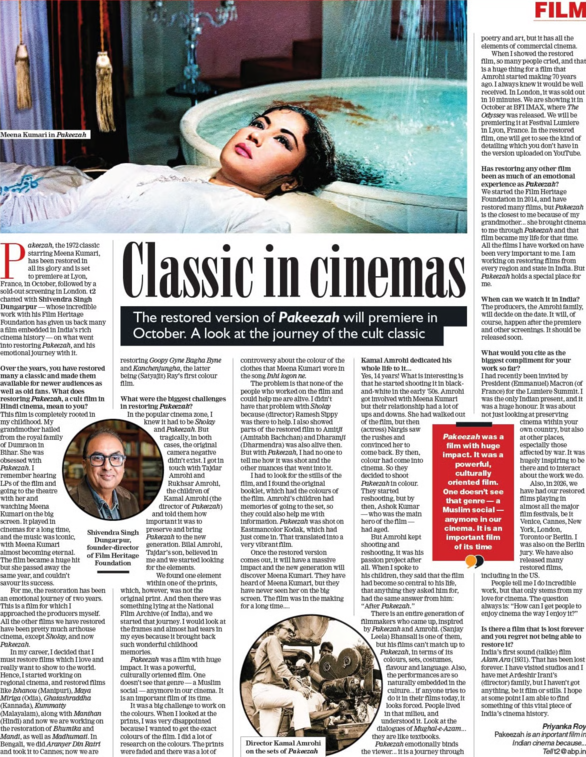
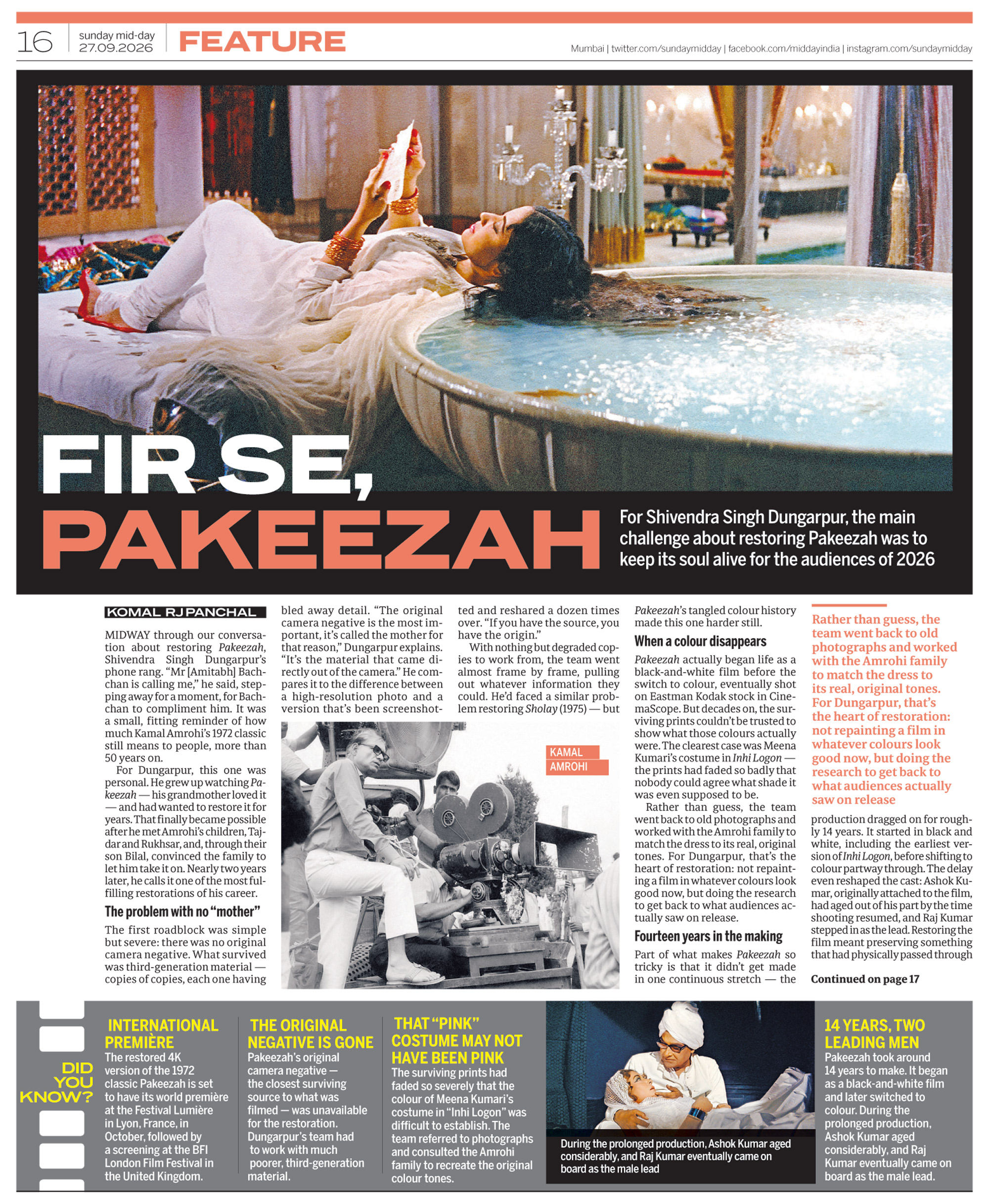
NEWS ARTICLES
(Click on image to read the full article)





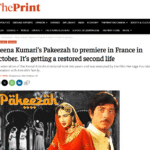


ABOUT KAMAL AMROHI
Kamal Amrohi (1918–1993) was an acclaimed Indian filmmaker, screenwriter, and dialogue writer, celebrated for his poetic storytelling and visual elegance. Born Syed Amir Haider Kamal Naqvi in Amroha, Uttar Pradesh, he moved to Bombay in his late teens. He soon started writing for Sohrab Modi, producing a series of reformist socials such as ‘Jailor’ (1938), the lavishly mounted ‘Pukar’ (1939) and ‘Bharosa’ (1940). Throughout the ‘40s he served as a resident screenwriter at Bombay Talkies before writing and directing the haunting tale of lost love and insanity ‘Mahal'(1949), produced by the studio. Most of his writing work in the 40’s dealt with feudal, Muslim families or Muslim royalty, for directors such as K. Asif (Phool, 1944) and A.R. Kardar (‘Shahjehan’, 1946).
Amrohi returned to the genre of the Urdu historical in the grandest possible fashion: K. Asif’s labour of love ‘Mughal-e-Azam’ (1960) for which Amrohi produced timelessly evocative Urdu dialogue along with Wajahat Mirza. Amrohi’s passion project ‘Pakeezah’ (1971), over fifteen years in the making, starring his wife Meena Kumari, was the most emphatic and elaborate example of the Urdu social that is hailed as a landmark of Indian cinema. In 1983, Amrohi made the period drama ‘Razia Sultan’, said to be the most expensive film at the time, but which unfortunately failed at the box office.
His films are renowned for their lyrical dialogues, atmospheric cinematography, and exploration of love and destiny. In 1958, Amrohi founded Kamalistan Studio and left a lasting influence on Indian cinema.