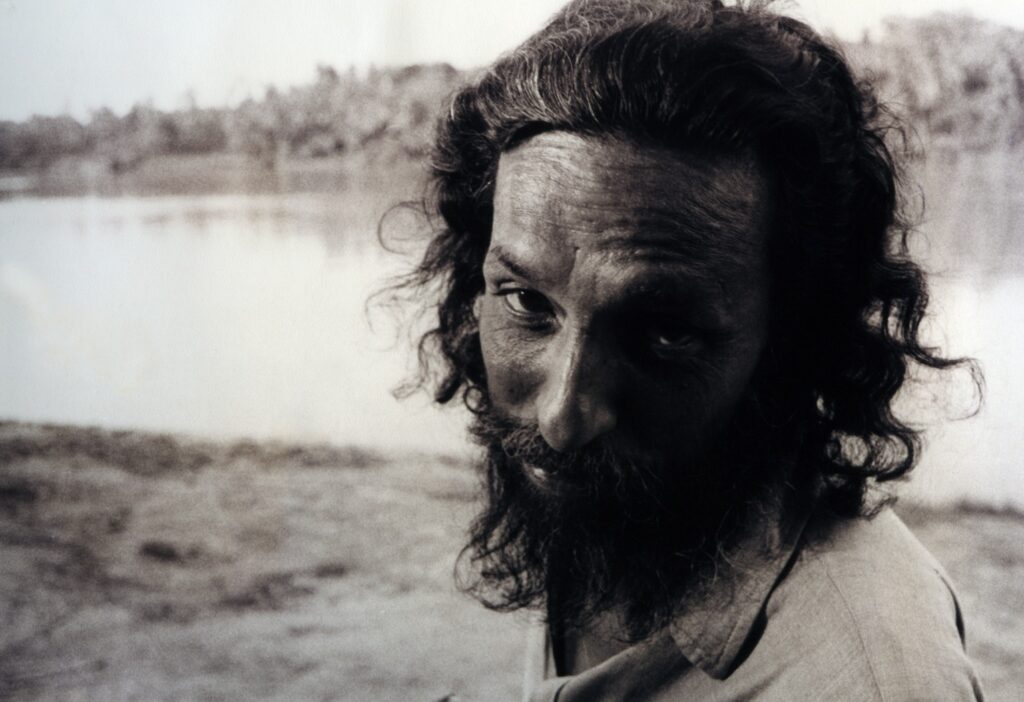


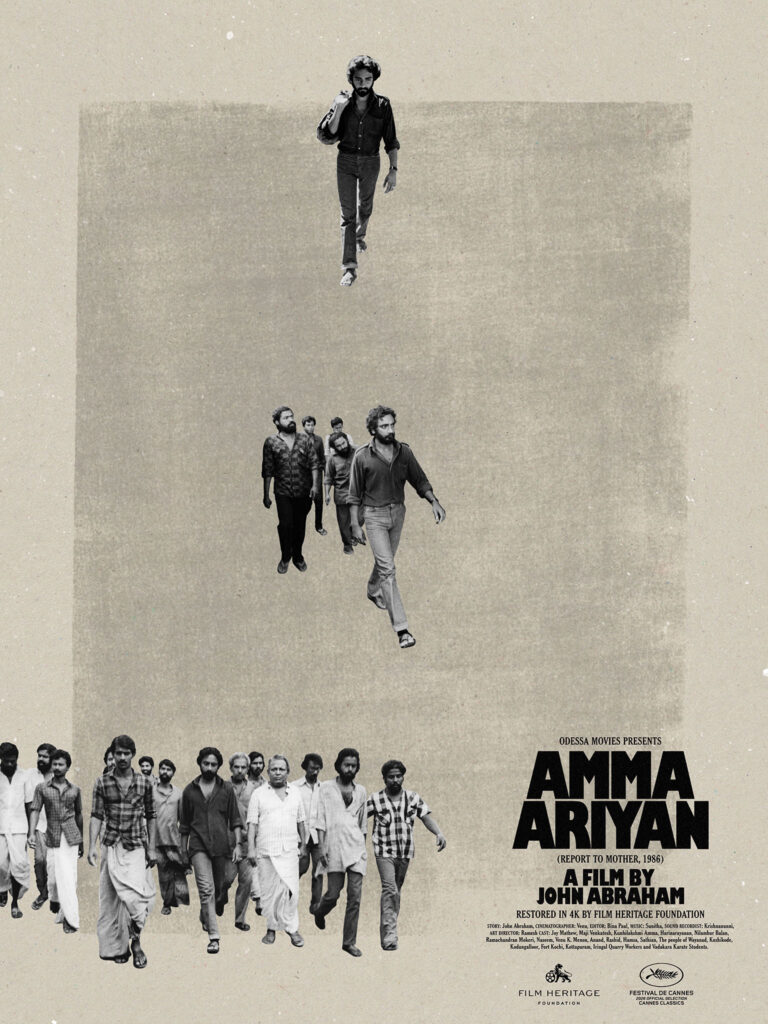
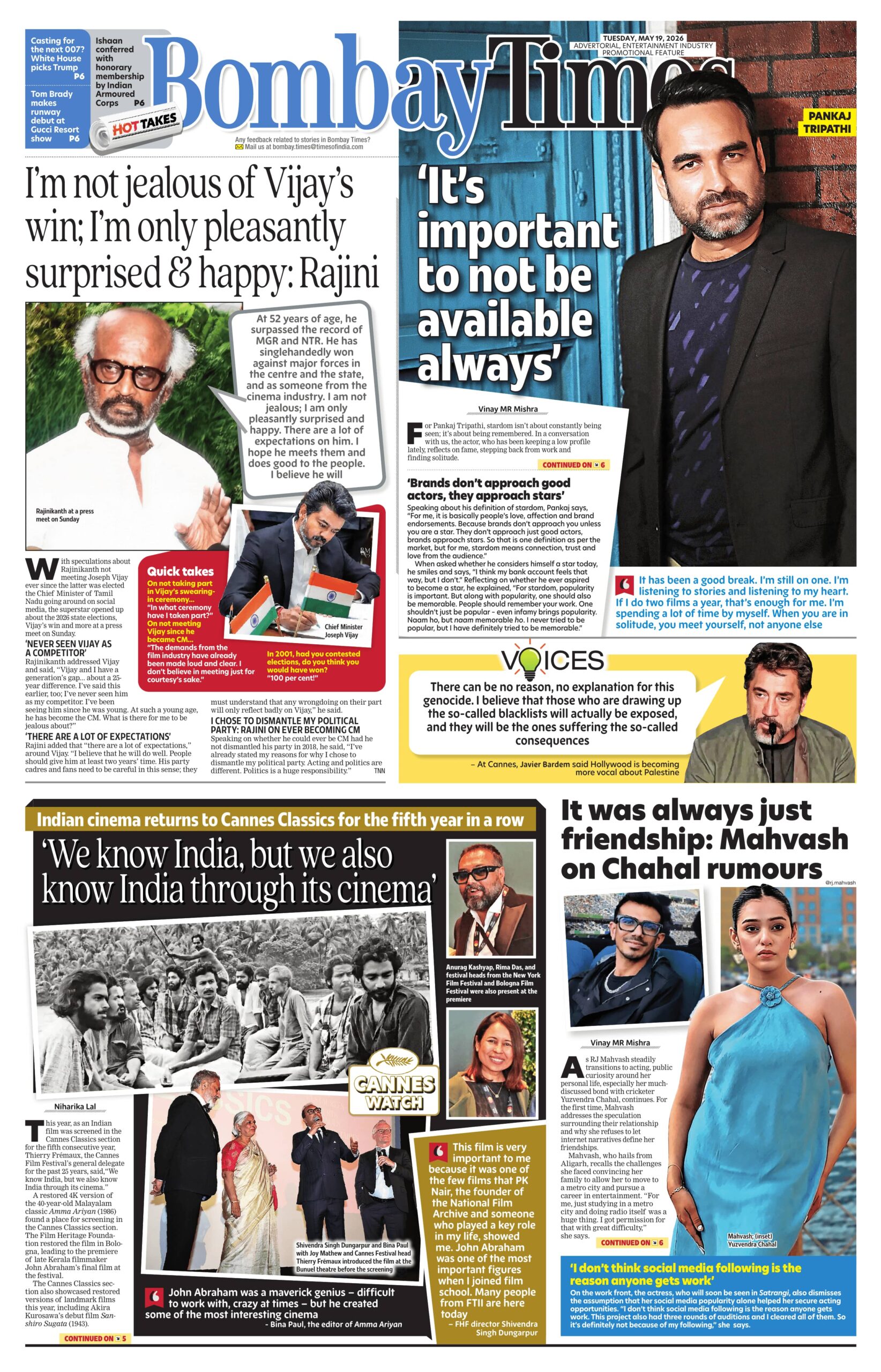
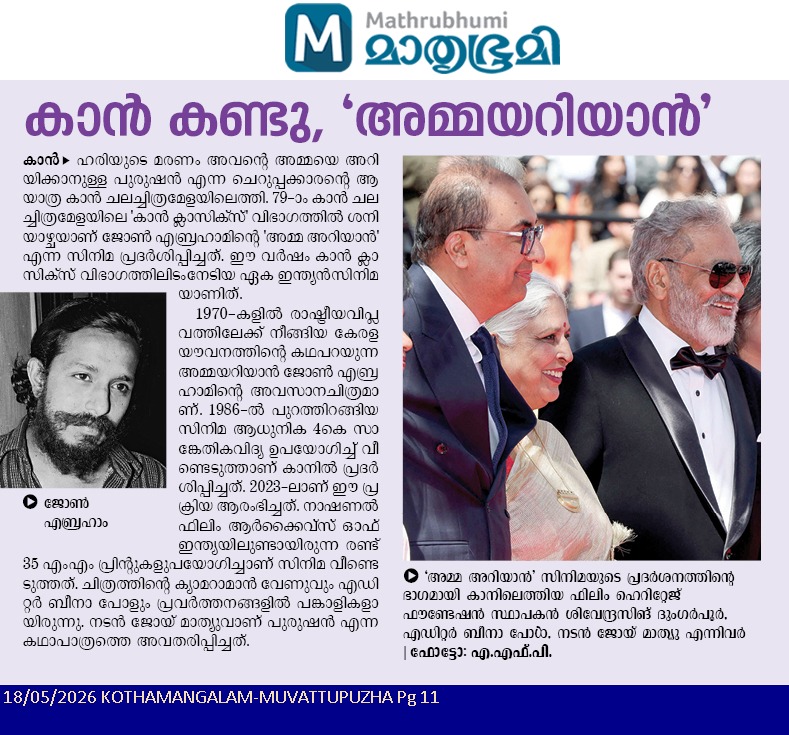
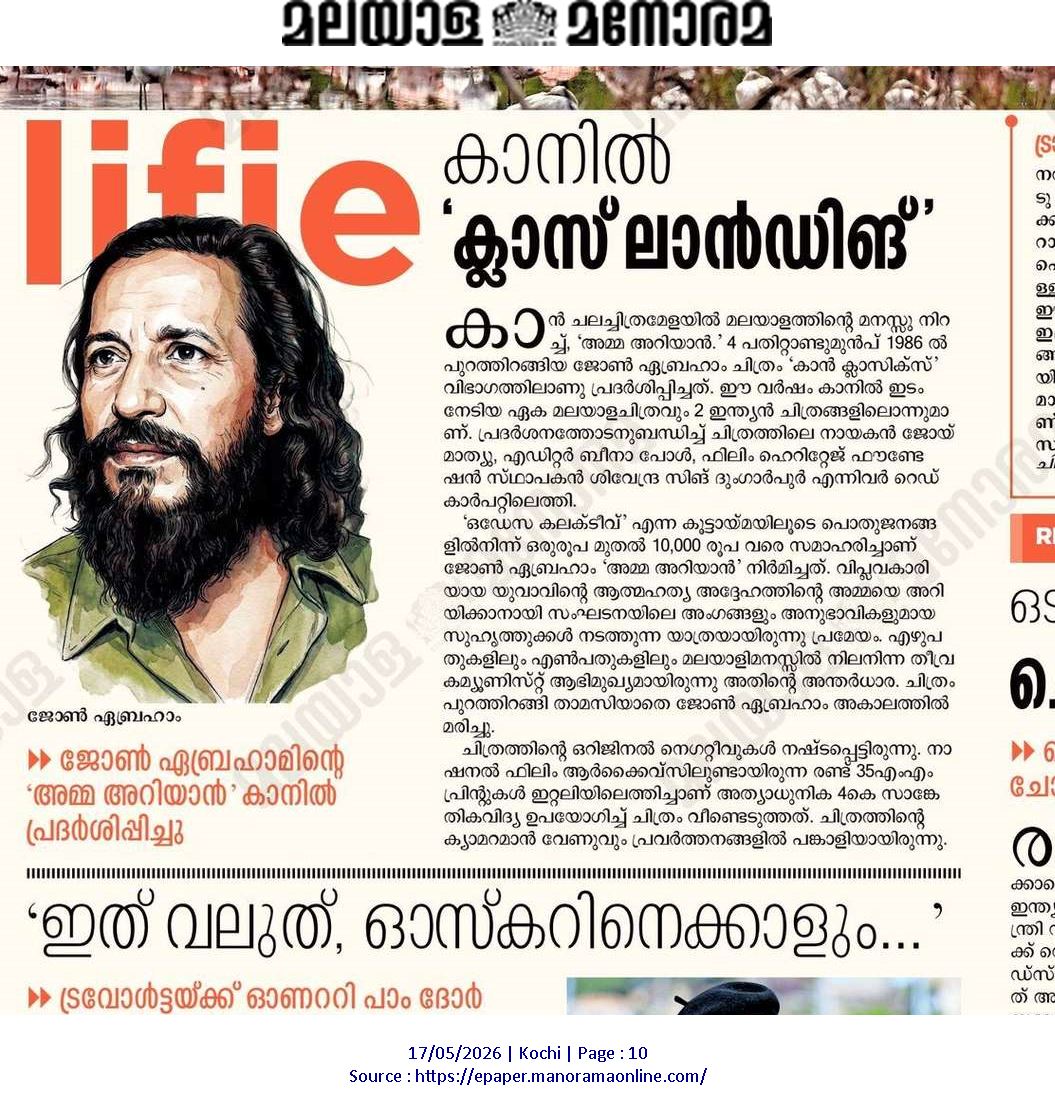
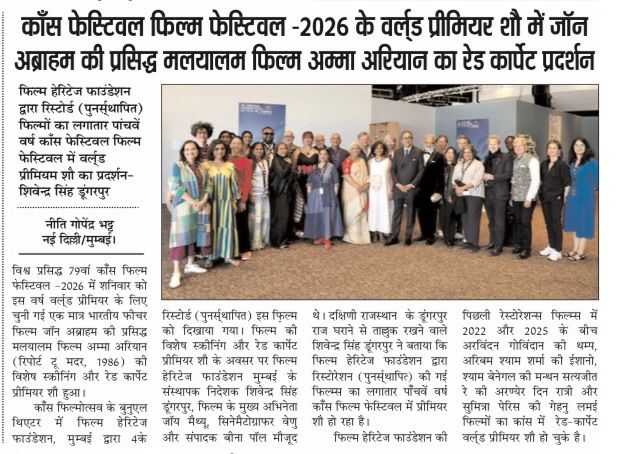
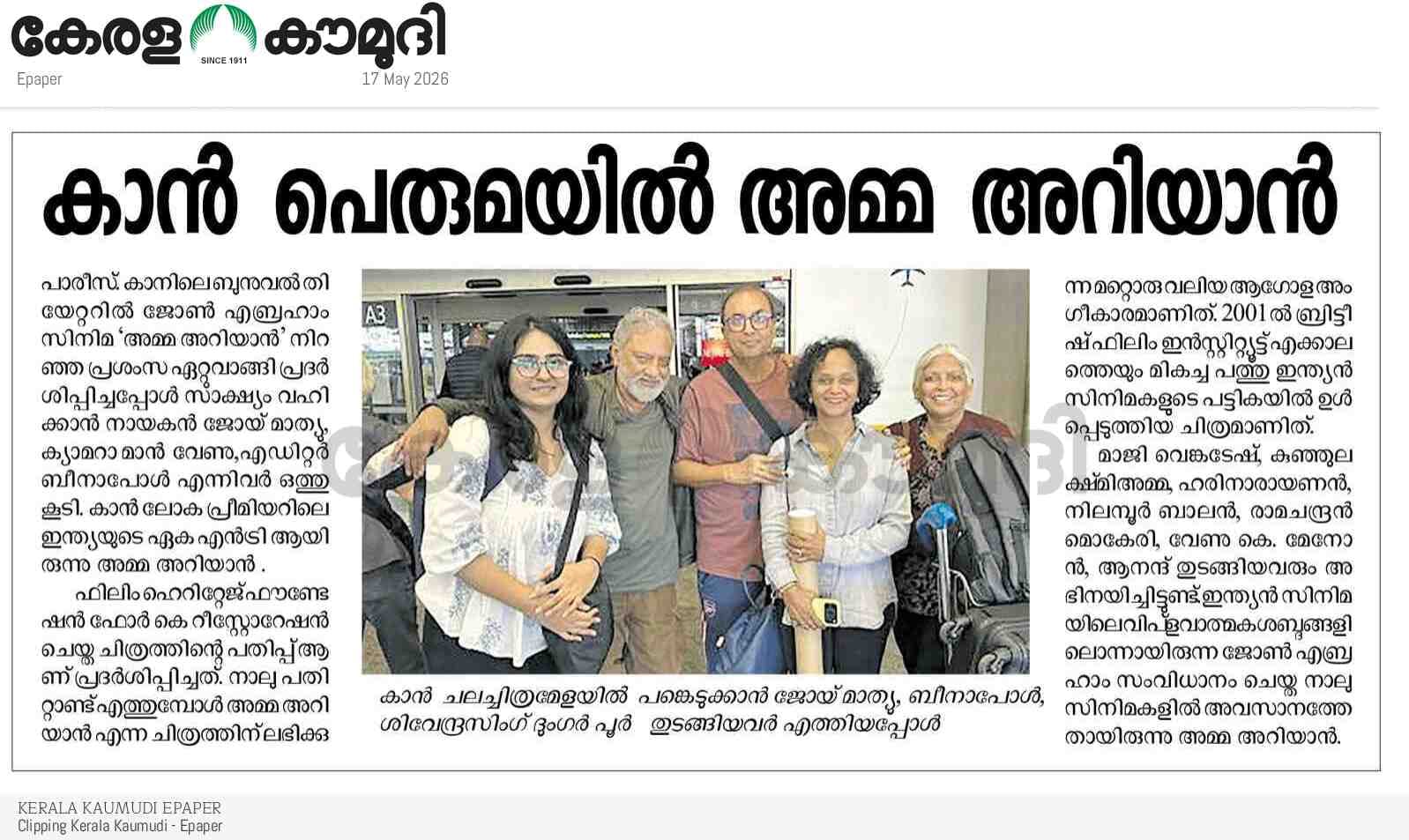
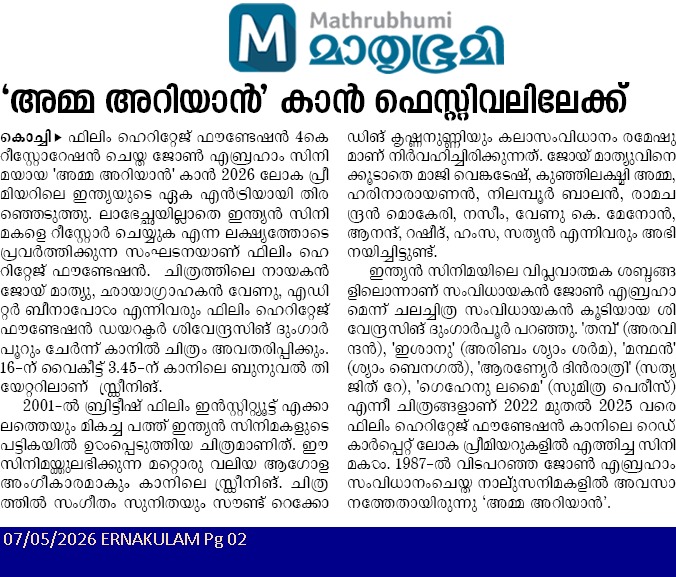
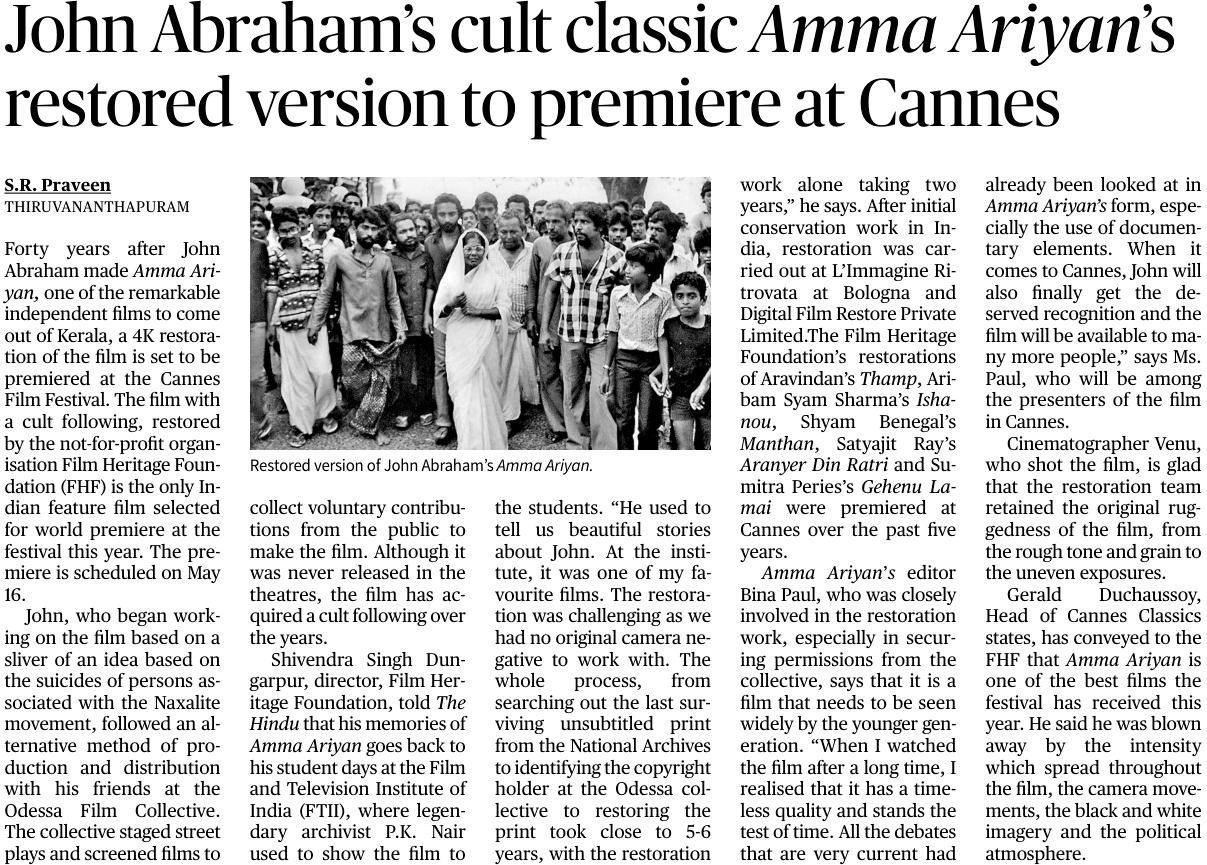
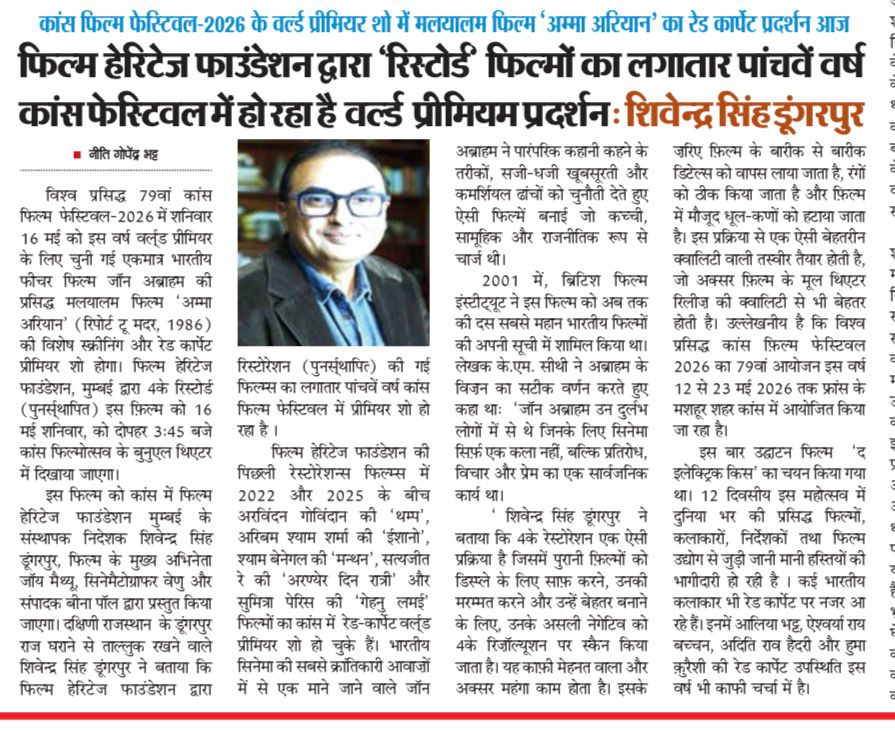
Film Heritage Foundation returns to the Cannes Film Festival for a fifth year in a row with another restoration of a singular gem of Indian cinema – the maverick director John Abraham’s Malayalam film “Amma Ariyan” (Report to Mother, 1986). In 2001, the British Film Institute included “Amma Ariyan” in its list of the Ten Best Indian films ever made. The film is the only Indian film selected for Cannes Classic this year.
John Abraham is often described as a radical filmmaker—though that word only scratches the surface. His work rejects conventional storytelling, polished aesthetics, and commercial expectations in favour of something raw, collective, and politically alive. In the words of writer K.M. Seethi, “John Abraham belonged to a rare breed for whom cinema was not just an art, but a public act of resistance, thought, and love.”
Film Heritage Foundation’s earlier restorations – Aravindan Govindan’s “Thamp”, Aribam Syam Sharma’s “Ishanou”, Shyam Benegal’s “Manthan”, Satyajit Ray’s “Aranyer Din Ratri” and Sumitra Peries’ “Gehenu Lamai” had red-carpet world premieres at the Cannes Film Festival in 2022, 2023, 2024 and 2025.
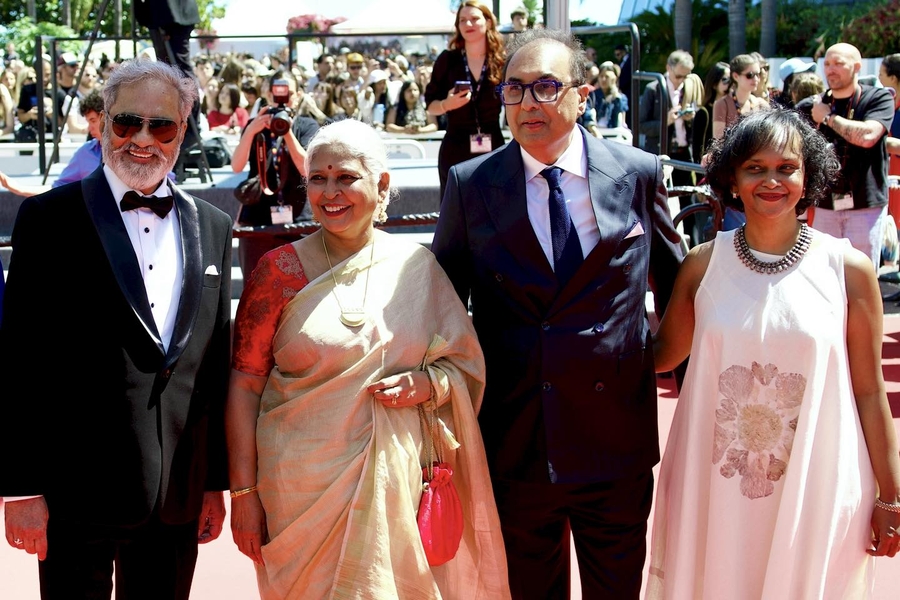
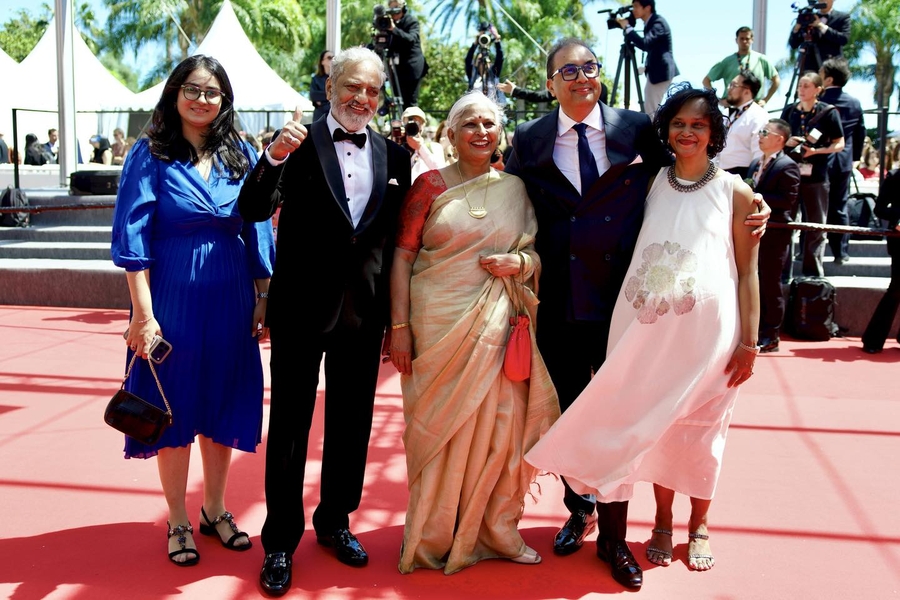
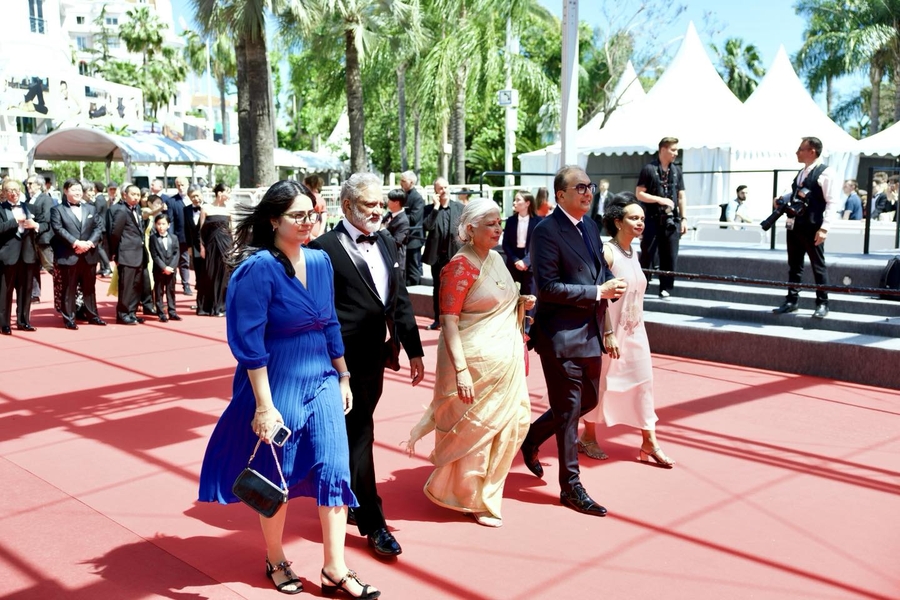
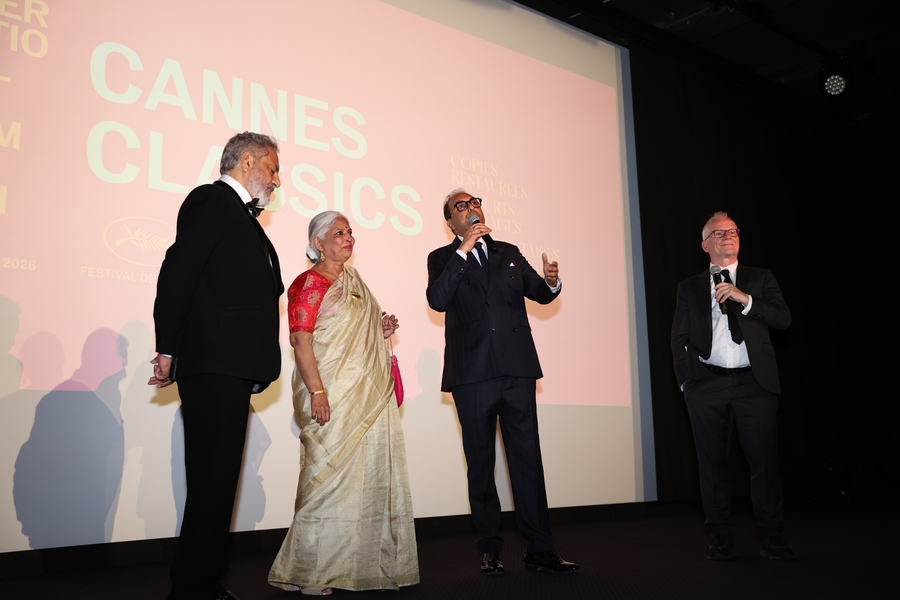
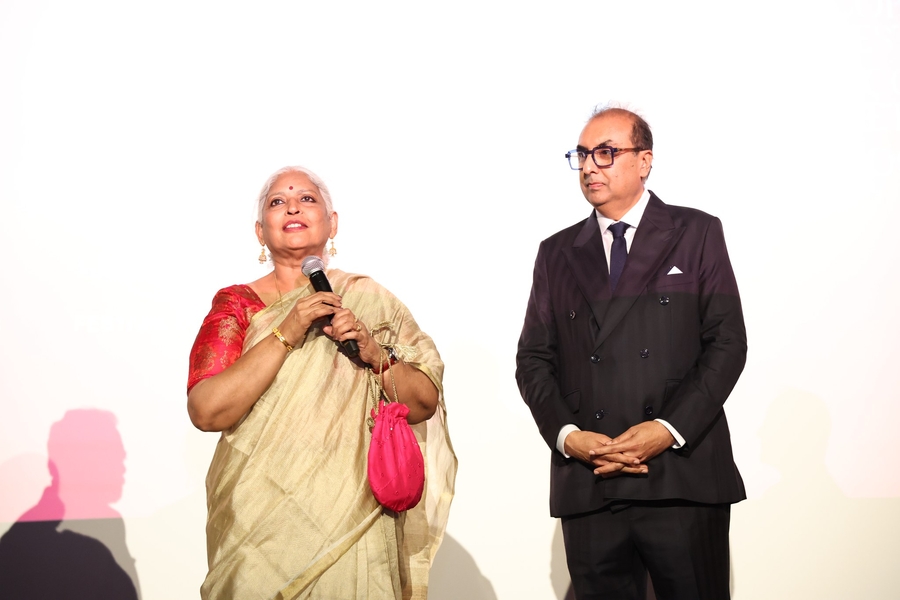
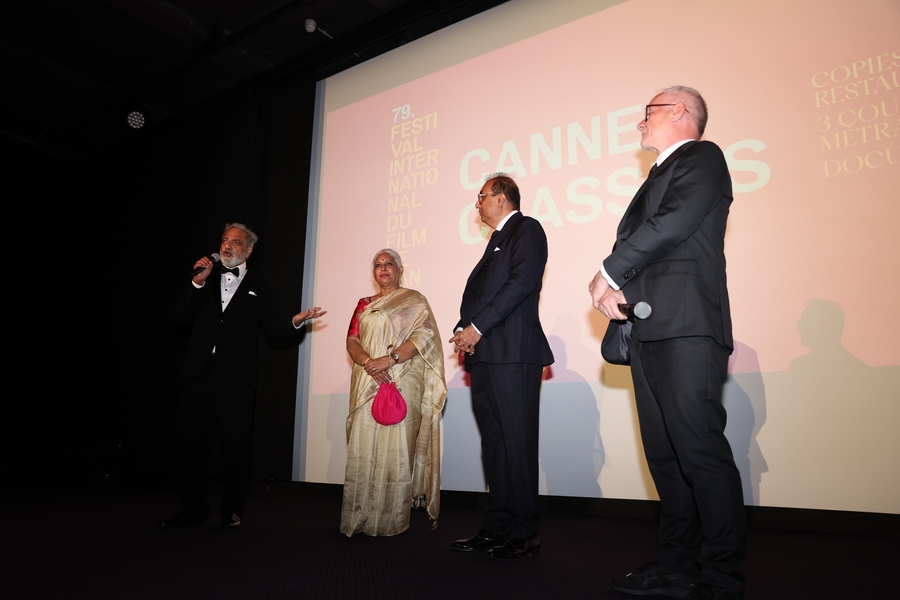
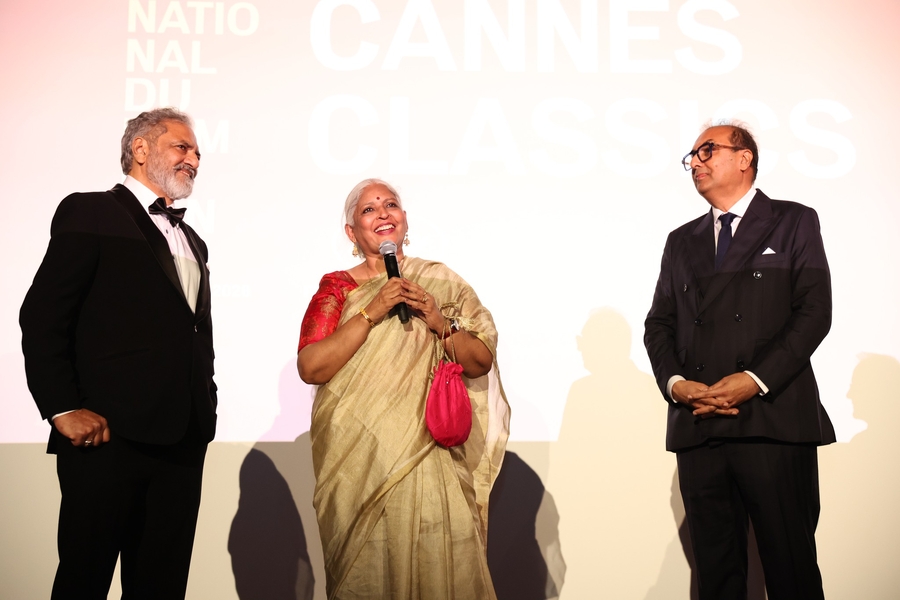
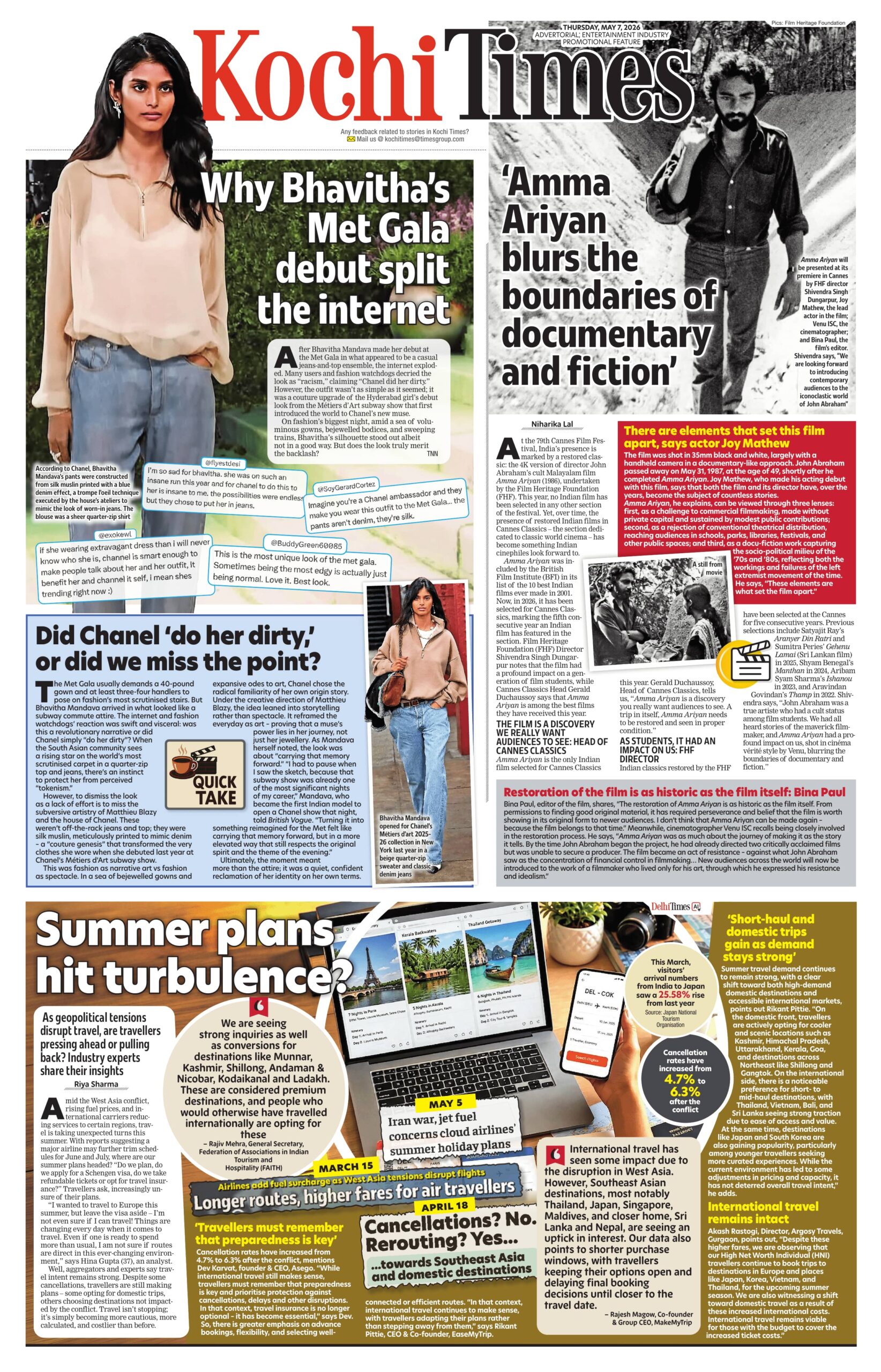
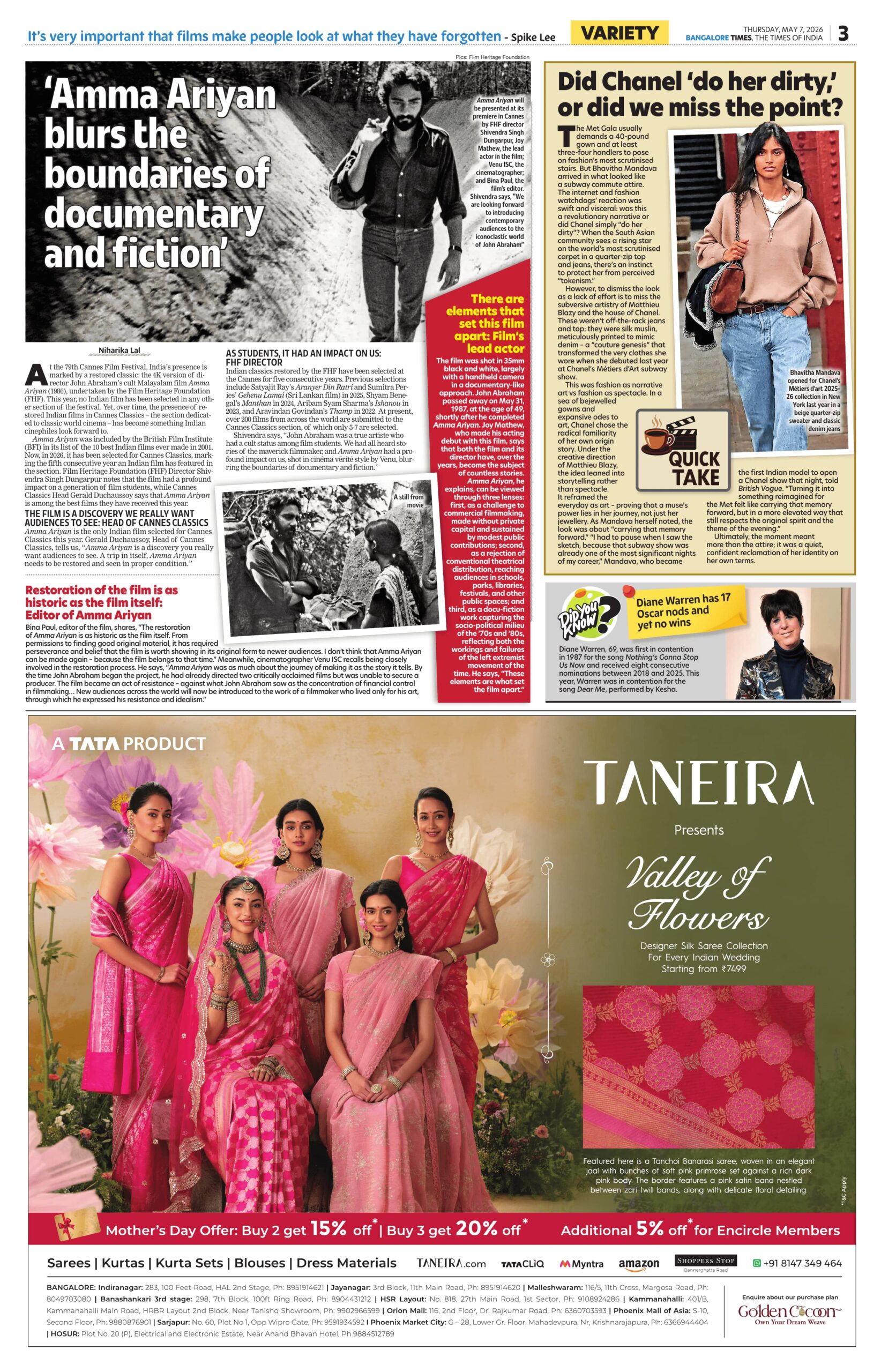
The film will be presented at its premiere in Cannes by Shivendra Singh Dungarpur, Director, Film Heritage Foundation, Joy Mathew, the lead actor in the film, Venu ISC, the cinematographer and Bina Paul, the editor of the film.
A one-of-a kind film of the people and for the people
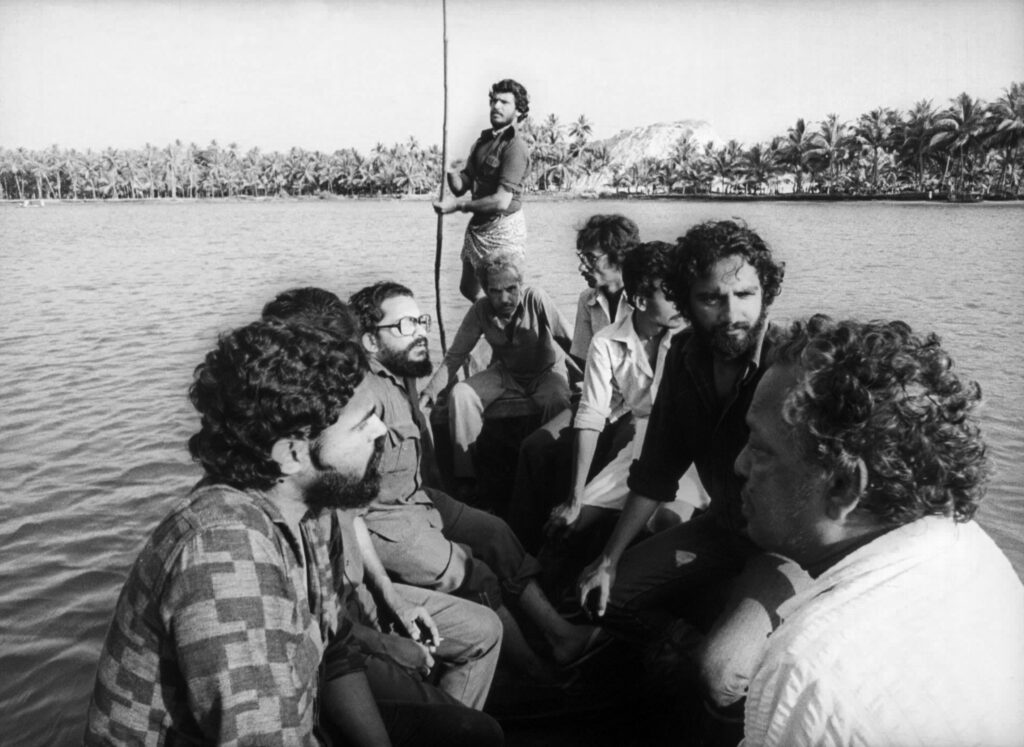
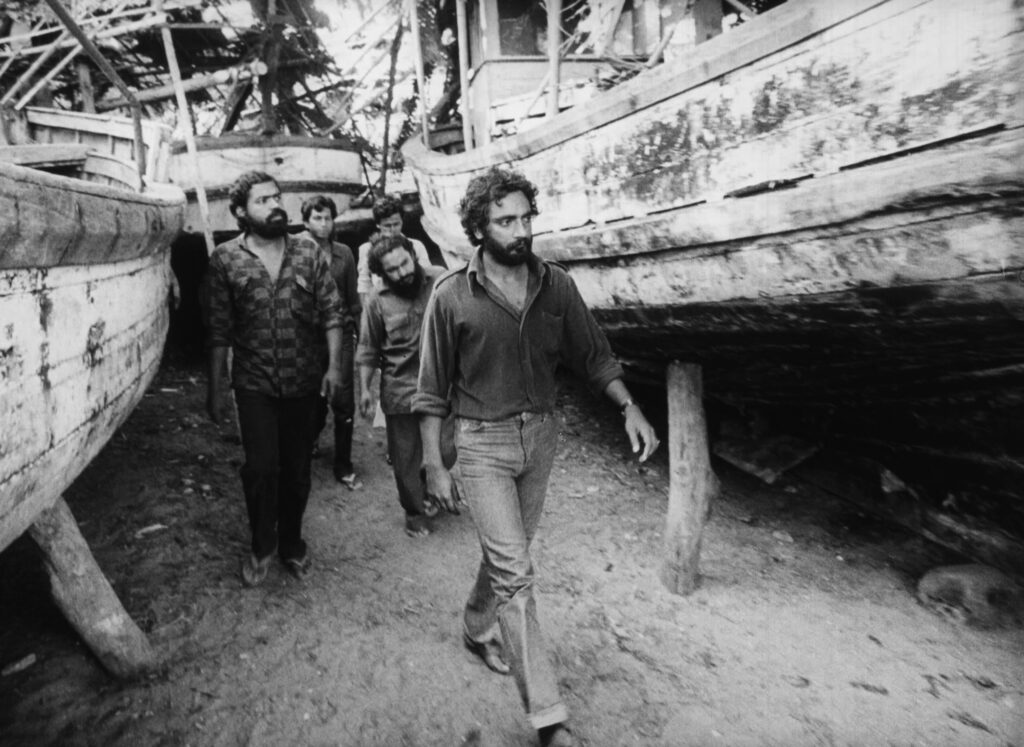
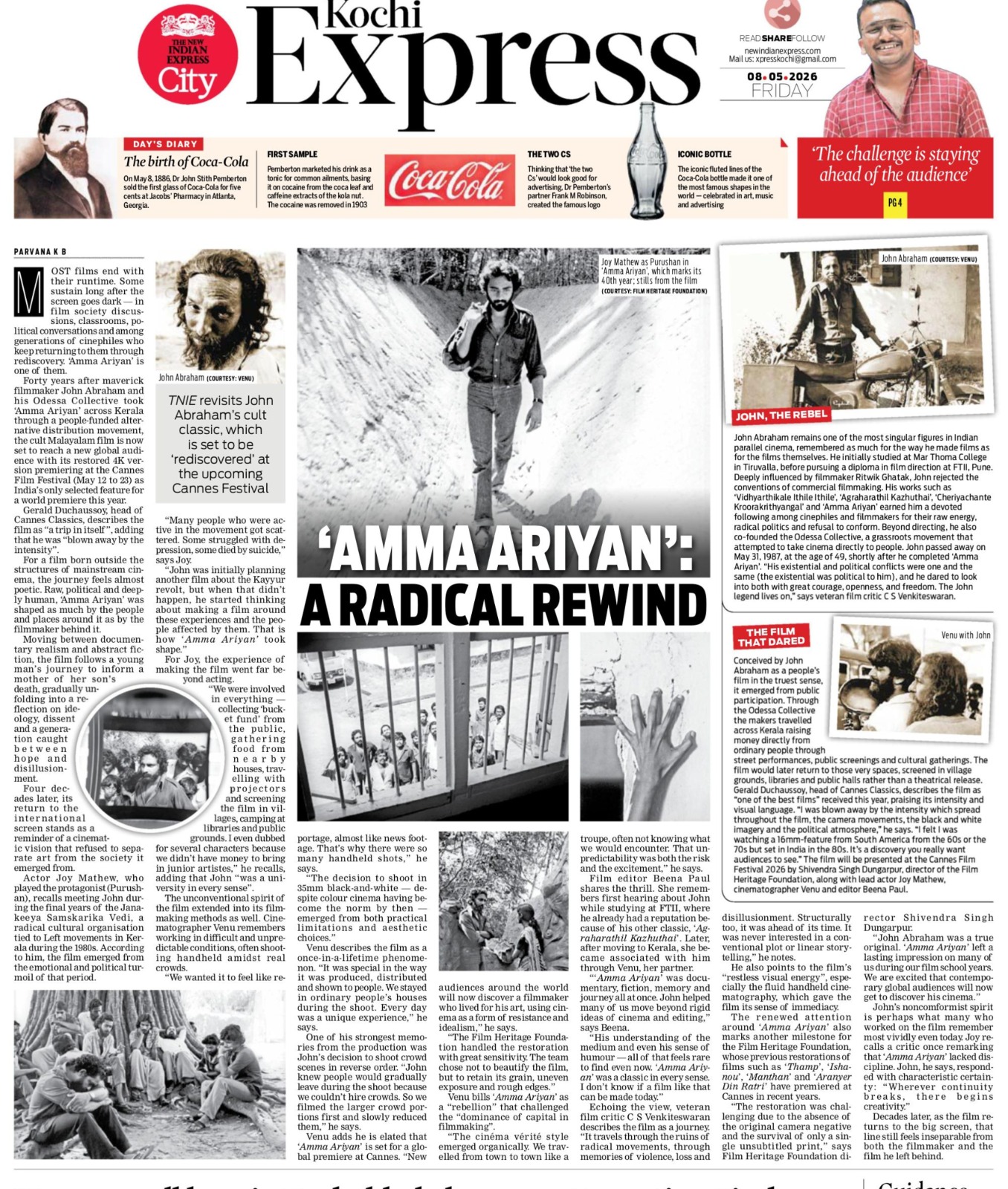
John Abraham was fiercely opposed to the idea of cinema being viewed purely through the lens of profit, believing that it stifled creative freedom. “Amma Ariyan” was conceived as a film of the people for the people. The film was produced by the Odessa Collective, a group of film enthusiasts, of which Abraham was a founder member, who wanted to break the shackles of the mainstream industry on film production and distribution. The answer was a radical experiment in funding, production and distribution of the film. Members of the Odessa Collective travelled from village to village, beating drums, performing street plays and screening classic films on a 16mm projector, seeking contributions from local people to finance the film. The aim was not to release the film commercially but to follow a travelling cinema model, taking the film back to the people who helped make it.
SHIVENDRA SINGH DUNGARPUR:
The selection of Film Heritage Foundation’s restoration of John Abraham’s Malayalam film “Amma Ariyan” for a world premiere at the Cannes Film Festival is a fantastic validation of the work that we have been doing. This will be the fifth year in a row that a Film Heritage Foundation restoration will be screening at Cannes. This year too we have selected a rare gem of Indian cinema – this deeply introspective political film, the final film of John Abraham, that was in danger of being lost. There was no original camera negative and just one unsubtitled print of “Amma Ariyan” survived that we could use for the restoration.
John Abraham was a true artist who had a cult status amongst film students when I was studying at the Film Institute in Pune. We had all heard the stories of the maverick filmmaker and “Amma Ariyan” had a profound impact on us, shot in cinema verité style by Venu, blurring the boundaries of documentary and fiction . We are looking forward to introducing contemporary audiences to the iconoclastic world of John Abraham.
JOY MATHEW, ACTOR:
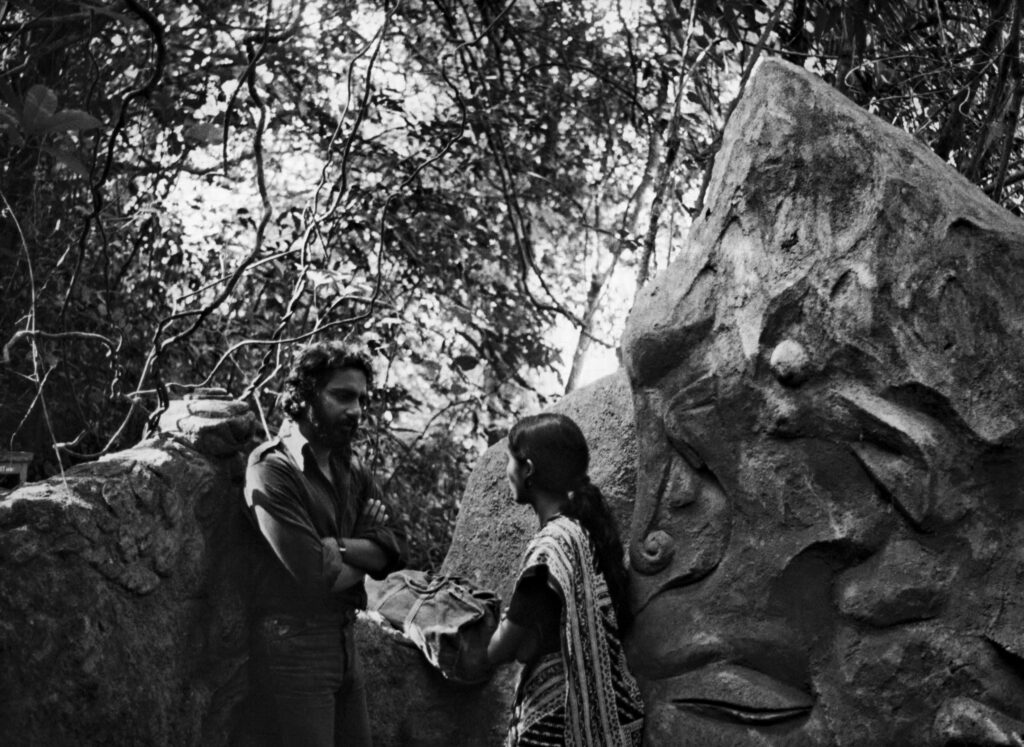
A film that was directed by John Abraham 40 years ago – “Amma Ariyan” – is being screened at the renowned Cannes Film Festival, this year. I’m immensely pleased at this. In fact, I played my first lead role in this film. This historic film – that was at first casually written off, and sometimes even derided by the critics – has now been restored under the watch of Shivendra Singh Dungarpur, who spent his valued time, money and energy on the project. As a matter of fact, it is his work of restoration that has earned the film its eligibility to be screened at Cannes. It is also what has earned my gratitude to Shivendra Singh Dungarpur. And to the organisers of the Cannes Film Festival who prioritise and promote projects of such nature.
As it happens, both the film and its director are subjects of countless stories. The film itself can be looked at through three different lenses. One, as a film that challenged commercial film-making. Made with no private capital. And solely through the accumulation of modest contributions from ordinary people. Two, as a film not exhibited in theatres. Instead, one that was exhibited – and is being exhibited – in schools, parks, libraries, festivals and other public spaces. And three, as a film with a different style of storytelling. A docu-fiction style that brings alive the socio-political milieu of the 70’s and the 80’s, that marks both the workings and the failures of the left extremist movement of the times. These are three aspects that make the film different from any other.
And again, there’s so much to say about the personal relationship between John Abraham and me, the professional bond between the director and the actor, how I eventually lent my voice to seven different characters in the film, and how we spend our three years in making the film – so much, that I can’t attempt to even start relating it here. Instead, I will close by placing on record – once again – my deep appreciation and admiration of Shivendra Singh Dungarpur and his mission of restoration.
BINA PAUL, EDITOR:
The restoration of Amma Ariyan is as historic as the film itself. From permissions to finding good original material has needed perseverance and belief that the film is worth showing in its original form to newer audiences. The commitment that Shivendra Singh Dungarpur and Film Heritage Foundation have shown toward this, is finally what made it happen. Today, to see Amma Ariyan as it had been conceived one recognises once again the genius of John Abraham and the idea that was the Odessa Collective.
I can never forget the first time I saw the rushes of Amma Ariyan. It was just mind-blowing. From the outside, the process looked chaotic. But there was a flow John was following, something only he could fully see. He knew the beginning and the end, but the rest of the film just evolved as we went along. The film is a tribute to everyone who worked towards making it and those who believed in the ideals it embodies.
I don’t think that Amma Ariyan can be made again—because the film was of that time, the purity of John’s approach to filmmaking and how it was about the collective involvement of people in the making of the film with no link to money, and how it mirrored the angst and disillusionment of the youth that was so intrinsic to the radical politics of Kerala at the time.
VENU ISC, CINEMATOGRAPHER:
I’m so happy that Film Heritage Foundation chose to restore the film. It’s incredible that a film that was a journey itself, not only in terms of the narrative, but also the process, is continuing the journey forty years after it was made with a premiere at the Cannes Film Festival. Film Heritage Foundation has done a remarkable job of restoring “Amma Ariyan”. They consulted me regularly sharing work-in-progress clips with me, not beautifying the but retaining its grain, uneven exposure and the rough edges that were not defects but integral to the shooting of a film made with limited resources.
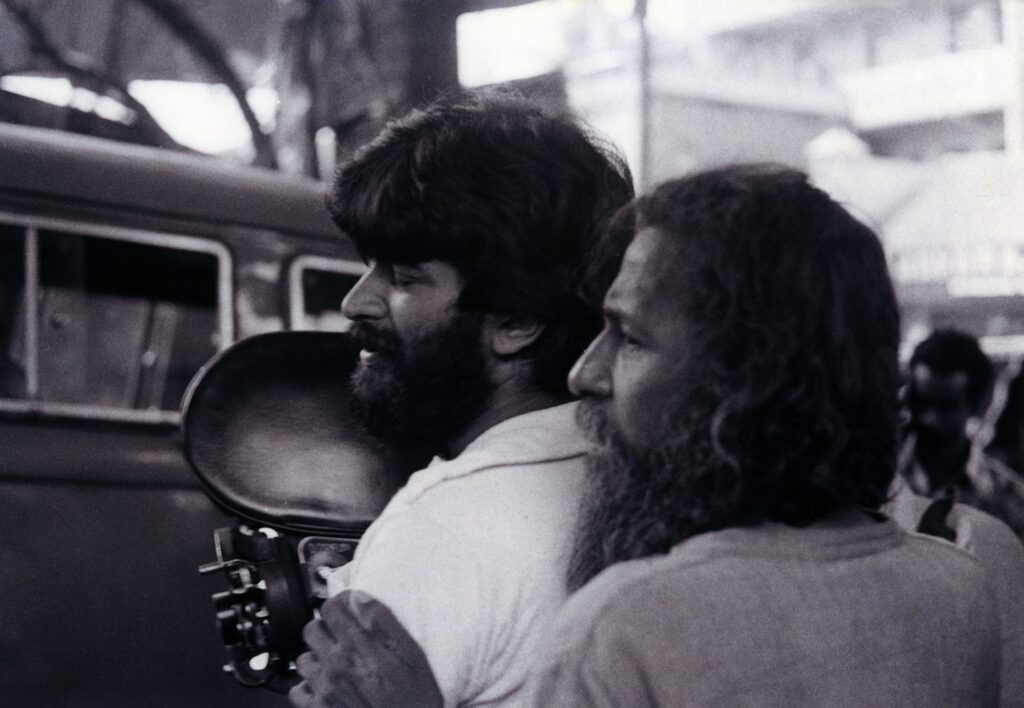
Amma Ariyan is a journey . . .not only the narrative of the film but the process of making it. John Abraham had already made two films when he decided to make Amma Ariyan. After two artistically successful film he was unable to find a producer . . . Amma Ariyan was a kind of rebellion to what he believed was the hegemony of capital control by few. The formation of the Odessa Collective not only to fund the film but to distribute it by non-traditional means, was in response to this. But this also meant the film was shot quite untraditionally. We decided to shoot on 35mm B & W with a mainly handheld camera. These were deliberate choices. Working almost in a documentary style with me holding the camera and John behind me literally pushing me into crowds . . . who were not only actors but people participating in the film. The cinema verité style emerged from the situations we were shooting . . . John characteristically felt chaotic. We travelled from town to town like a travelling band . . . often with no idea about what we were going to encounter. This was the excitement and the risk . . . two months of shooting with a crew and a maverick director. A good friend who went too early.
Thanks to Film Heritage Foundation new audiences across the world will be introduced to the work of a filmmaker who lived only for his art through which he expressed his resistance and idealism.
C.S. VENKITESWARAN, FILM CRITIC:
Our films journey either outwards or inwards, but seldom do they find explosive interactions between the two, which is what sustains his relevance even today. His existential and political conflicts were one and the same (the existential was political to him), and he dared to look into both with great courage, openness, and freedom. The John legend and his legacy live on, and continue to inspire the present.
GÉRALD DUCHAUSSOY, HEAD OF CANNES CLASSICS FESTIVAL DE CANNES:
“Amma Aryan is definitely one of the best films we have received this year. I was blown away by the intensity which spread throughout the film, the camera movements, the black and white imagery and the political atmosphere. I felt I was watching a 16mm-feature from South America from the 60s or the 70s but set in India in the 80s. That immediately felt right for us at Cannes Classics, a discovery you really want audiences to see. A trip in itself, Amma Aryan needs to be restored and seen in proper condition. Cannes will be a good start for the future.”
THE RESTORATION PROCESS
“Amma Ariyan” had always been on Film Heritage Foundation’s wish list to restore, as the only version in circulation was a poor quality video on Youtube that did not do justice to the film. While the actual restoration of “Amma Ariyan” took over a year and a half, the journey began much earlier in 2023. The first major challenge was to get clearance from the producers – Odessa Collective – to restore the film. We had to first track down surviving members of the collective almost four decades after the film was made and we were able to do this thanks to help from the editor of the film Bina Paul and film critic C S Venkiteswaran.

In March 2023 representatives of the collective agreed to let us restore the film. We put out a worldwide call through the International Federation of Film Archives (FIAF) network searching for any surviving elements, but the only elements we could find were two 35 mm prints, one with English subtitles and one unsubtitled, at the NFDC-National Film Archive of India. No original camera negative survived.
We accessed the films from NFDC-NFAI in October 2024. Film Heritage Foundation conservators found on inspecting these elements that the prints had deteriorated over time with broken splices, scratches and emulsion damage and they began the process with cleaning the film, repairing the broken sprockets and splices before both elements were sent to L’Immagine Ritovata in Bologna for further restoration.


The unsubtitled print was the main source element for the restoration, but during the film comparison, it was found that the subtitled print could be used in parts to fill gaps both in image and sound. After digitizing the films, the lab found the visuals to be very contrasty and muddy. Hours of manual work went into the restoration workflow. The sound restoration was particularly challenging as the sound was low and there was a significant amount of noise, clicks, small dropouts and other defects. In parts there was no sound at all. We checked with the sound engineer Krishnanunni and he said that John Abraham would sometimes decide not to use foleys in some scenes of the film accounting for these gaps in the sound. He also used reverse sound in some sections. More than 4000 manual interventions were carried out to address this. Throughout the process we shared work-in-progress clips with both the cinematographer Venu ISC and the editor Bina Paul to ensure that we maintained the grains, the blacks, the look and feel. The final grade was approved by Venu. We used every effort to remain as true to John Abraham’s original vision as we could be.
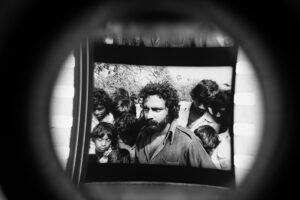
RESTORATION CREDITS
Restored by Film Heritage Foundation at L’Immagine Ritrovata laboratory and Digital Film Restore Pvt. Ltd. in association with Odessa Collective.
Special thanks to cinematographer Venu ISC and editor Bina Paul.
Funding provided by Film Heritage Foundation.
Amma Ariyan was restored in 4K from one of the only two surviving prints: the first-generation 35mm release print preserved at the NFDC – National Film Archive of India.
The release print had scratches, dust, emulsion damage, and was very contrasty. The sound had clicks, dropouts and background noise.
Hours of manual work went into addressing these issues and improving the visual and sound quality.
CAST AND CREW DETAILS
Amma Ariyan (Report to Mother), India, 1986, John Abraham
115 mins, B&W, Malayalam, English Subtitles, DCP, 4K, 1.37:1, Mono
Production Company: Odessa Movies, Story: John Abraham, Cinematographer: Venu, Editor: Bina Paul, Music: Sunitha, Sound Recordist: Krishnanunni, Art Director: Ramesh
Cast: Joy Mathew, Maji Venkatesh, Kunhilakshmi Amma, Harinarayanan, Nilambur Balan, Ramachandran Mokeri, Naseem, Venu K. Menon, Anand, Rashid, Hamsa, Sathian, The people of Wayanad, Kozhikode, Kodungalloor, Fort Kochi, Kottapuram, Iringal Quarry Workers and Vadakara Karate Students.
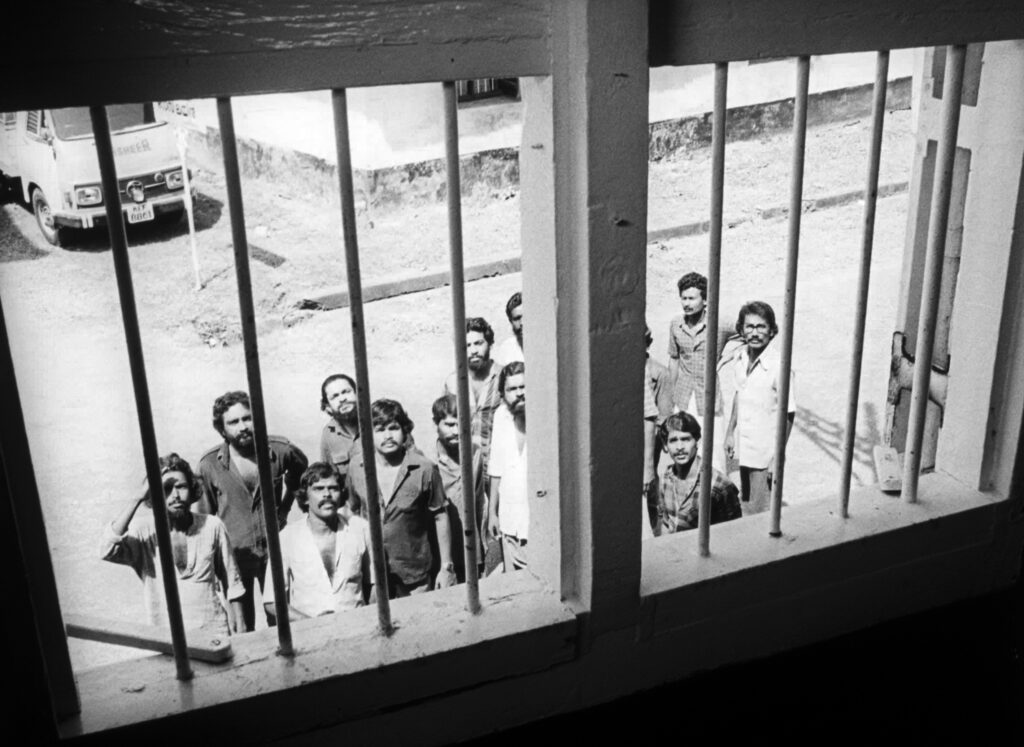
SYNOPSIS
“Amma Ariyan” (Report to Mother) was the iconoclastic filmmaker John Abraham’s final work of just four films that he directed before his untimely death in 1987 at the age of 49.
A film of the people for the people, the film was produced by the Odessa Collective, a group of film enthusiasts, of which Abraham was a founder member, who wanted to break the shackles of the mainstream industry on film production and distribution. The Collective travelled from village to village, beating drums, performing street plays and screening classic films on a 16mm projector, seeking contributions from local people to finance the film. In 2001, the British Film Institute included “Amma Ariyan” in its list of the Ten Best Indian films ever made describing it as “a highly complex commentary on the history of the relationships between the personal, the social and the political.”
The film was set against the backdrop of political and social ferment in Kerala in the 1970s during which revolutionary ideas, agitations by workers and students, and protests against police atrocities were the order of the day. Purushan (Joy Mathew) sets out for Delhi promising his mother to write to her. On the way, he finds a dead body identified as Hari’s and decides to go to Hari’s house to inform his mother of her son’s death. Along the way, Purushan collects a motley collection of comrades on his journey that swells into a crowd that throngs the doorstep of Hari’s mother. Purushan’s quest is captured through a non-linear narrative with flashbacks, inserts of footage, handheld camerawork and an unexpected editing rhythm. The film unfolds as a letter from a son to his mother drawing the viewer into a deeply intimate journey through the landscape of Kerala that delves into the political history of the state.
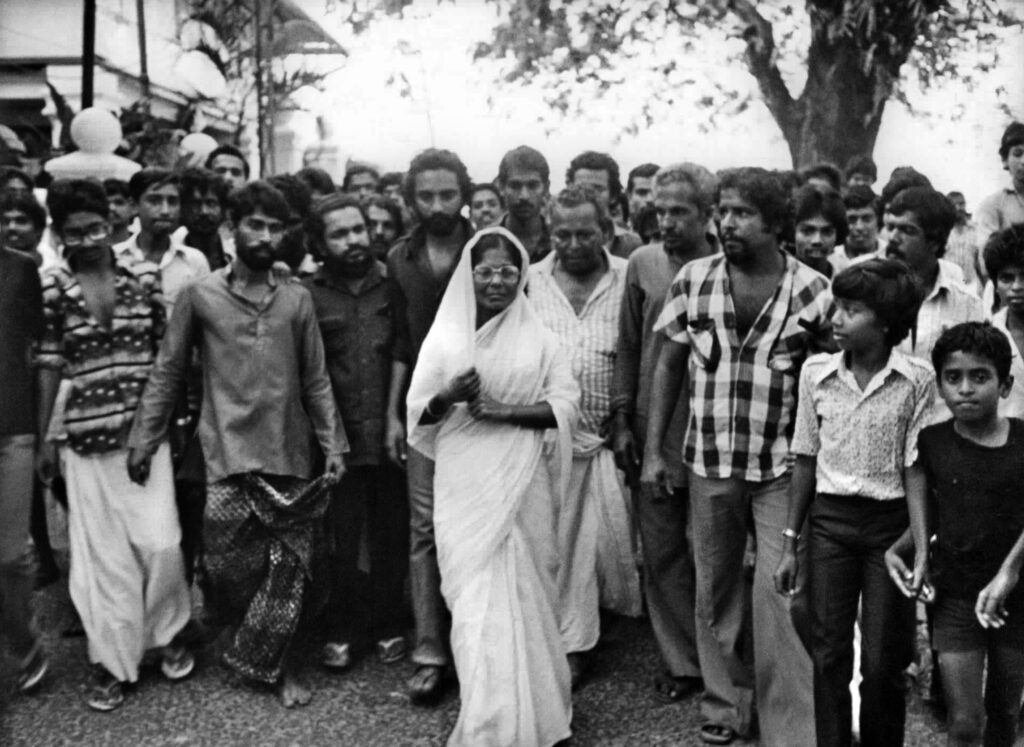
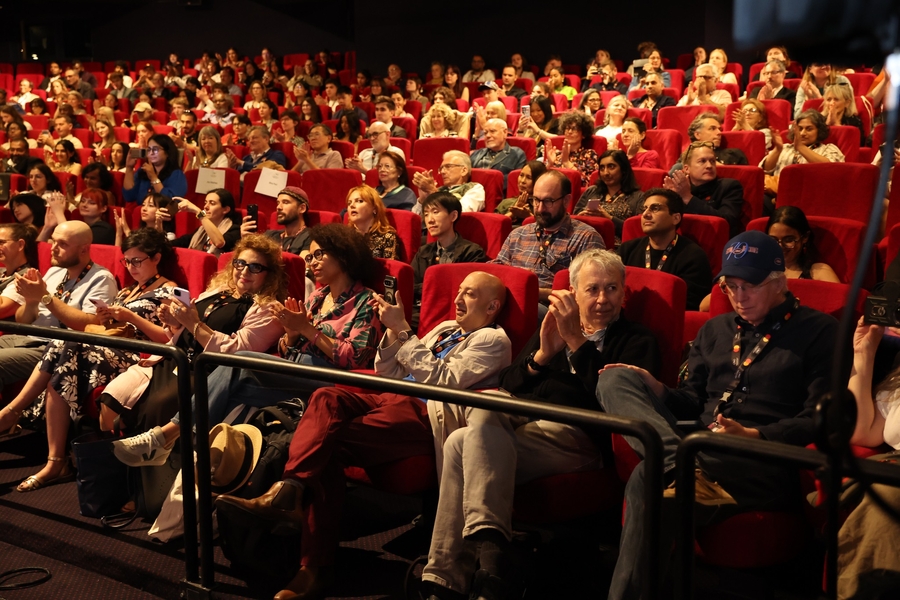
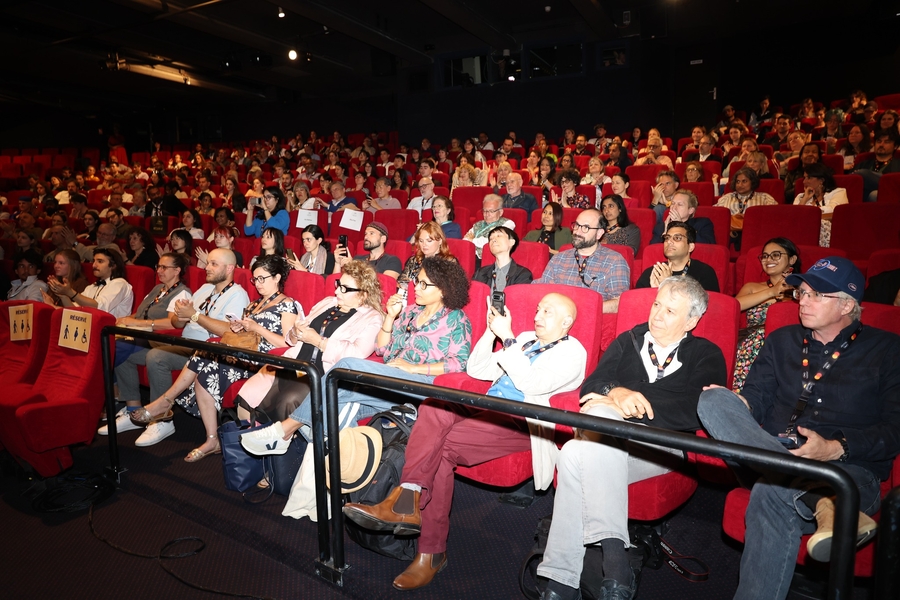
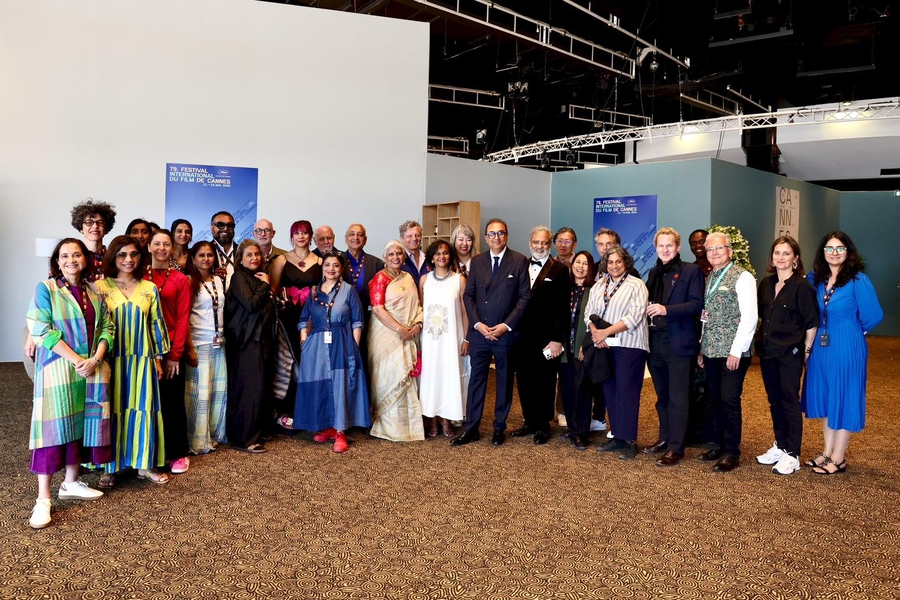
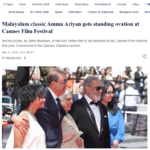
PHOTO GALLERY: CANNES CLASSICS 2026
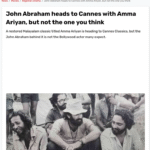
NEWS ARTICLES
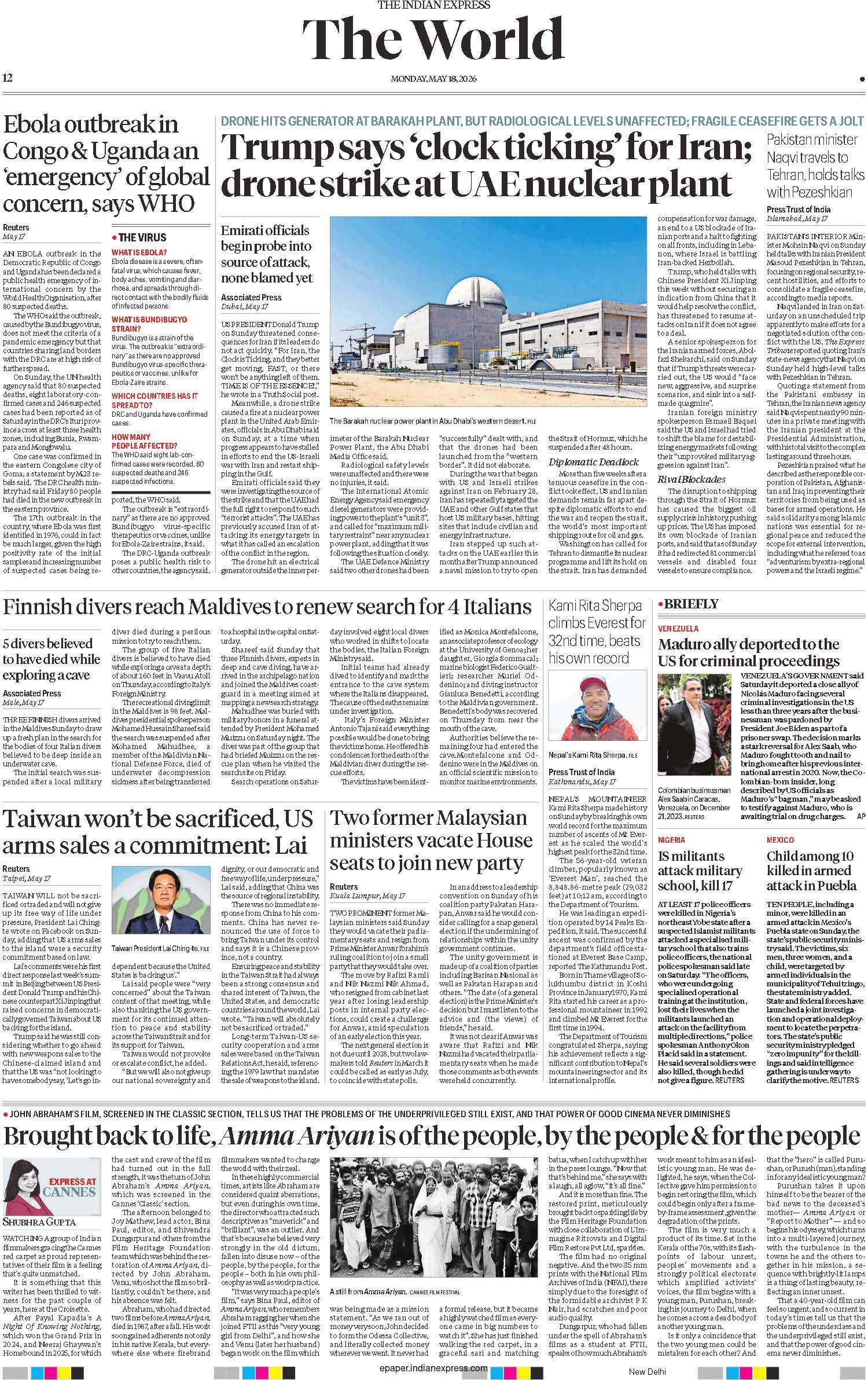
(Click on image to read the full article)



ABOUT JOHN ABRAHAM
John Abraham (1937–1987) has a cult following in India. He made just four films, but left a lasting impact. He was a radical filmmaker known for his politically charged, people-centred cinema that challenged dominant narratives in both form and content. Born in Kerala, he initially studied at Mar Thoma College in Tiruvalla before pursuing a diploma in film direction at the Film and Television Institute of India (FTII), Pune. At FTII, he was deeply influenced by the teachings of Ritwik Ghatak, whose emphasis on realism, political engagement, and emotional intensity left a lasting imprint on Abraham’s approach to cinema.
Rejecting mainstream filmmaking conventions, Abraham aligned himself with India’s parallel cinema movement, though he remained distinct in his radical politics and unconventional methods. His filmography, though small, is widely regarded as groundbreaking. His debut feature, Vidyarthikale Ithile Ithile (1972), was a satirical take on student life. He followed it with Agraharathil Kazhuthai, (1977) a biting critique of caste orthodoxy and social hypocrisy that gained critical acclaim. His Malayalam film Cheriyachante Kroorakrithyangal (1979) explored feudal oppression and moral decay within a patriarchal family structure. His final and most celebrated work, Amma Ariyan, (1986) stands as a landmark in Indian cinema for its collective narrative form and political urgency, chronicling a journey of activists grappling with loss, ideology, and resistance.
Beyond his films, Abraham was instrumental in founding the Odessa Collective, a grassroots movement that sought to democratize filmmaking by involving ordinary people in funding, production, and exhibition. This initiative embodied his belief that cinema should be accessible, participatory, and socially accountable.
John Abraham passed away on May 31, 1987 at the age of 49, shortly after he completed Amma Ariyan.