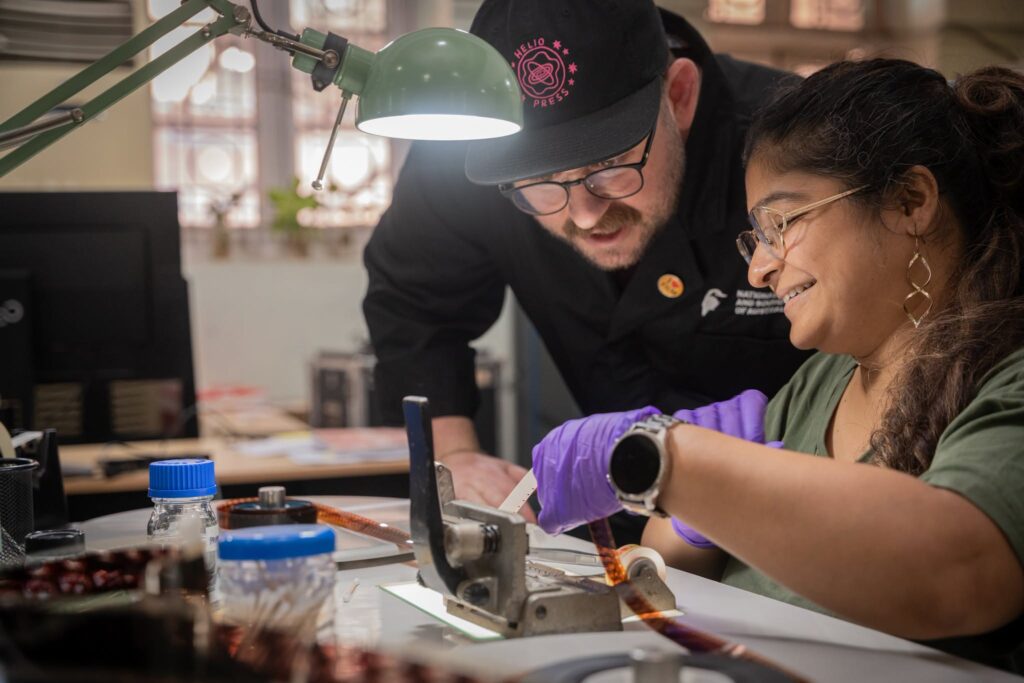


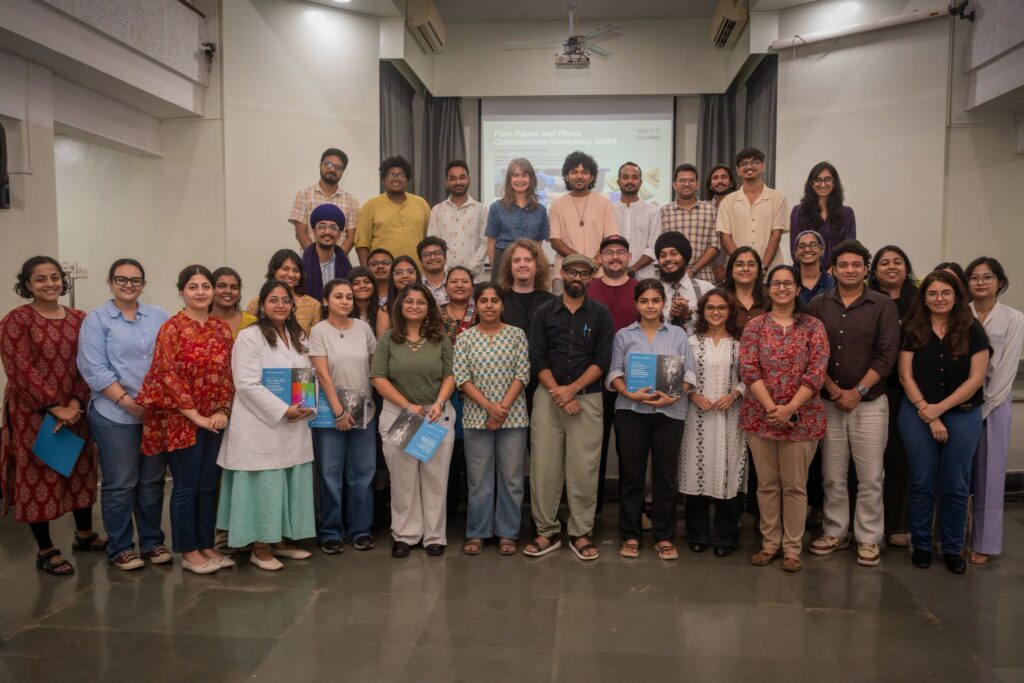
Film Heritage Foundation in collaboration with the NFSA – National Film and Sound Archive of Australia and with support from Centre for Australia-India Relations and Tata Trusts will conduct a three-day Film, Paper and Photo Conservation Workshop 2026 on August 20, 21 and 22, 2026.
The workshop will be taught by three leading experts: Dr. Sophie Lewincamp, Head of Conservation & Collection Management, James Campbell – Audiovisual Conservation Team Leader and Dieter Schmid – Film Services Technician Lead from the NFSA.
About the Workshop
The training program will introduce participants to the fields of film, paper and photographic conservation. The first day participants will delve into the best practices, identification and common degradation of these materials found in film archive collections through lectures, discussions and hands-on documentation sessions.
Over the next two days, participants will break into their interest groups for practical sessions. Film conservation will be taught by James Campbell and Dieter Schmid and paper and photo conservation will be taught by Dr. Sophie Lewincamp.
Course Structure
LECTURE SESSION (DAY 1): Joint session for all participants.
PRACTICAL SESSIONS (DAY 2 AND 3): As per the participant’s stream selection.
FILM CONSERVATION:
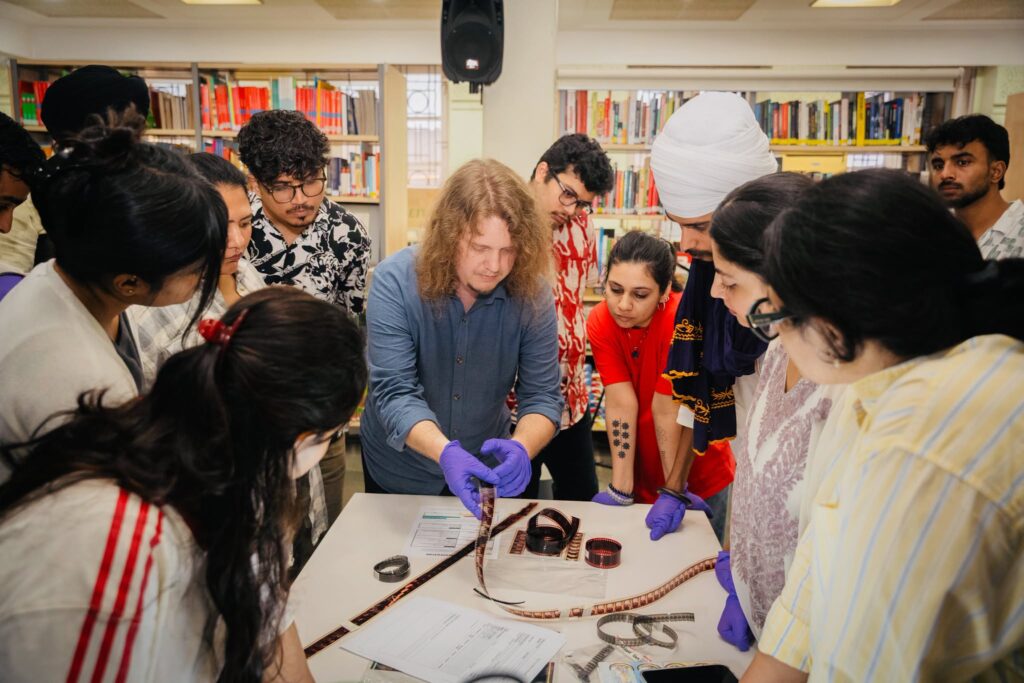
During the film conservation sessions, participants will develop skills in identifying a range of film types and formats and will practise safe handling techniques. The sessions will cover practical methods for repair, cleaning, and hazard removal, alongside discussion of the impacts of digitisation on conservation decisions. The workshop will also address digital film restoration, including selecting elements and scanners for digitisation, exploring restoration software, and understanding its limitations. Throughout, there will be an emphasis on conservation ethics and sustainable practice, encouraging thoughtful decision-making that balances intervention, resource use, and the long-term preservation of film materials.
PAPER AND PHOTO CONSERVATION:
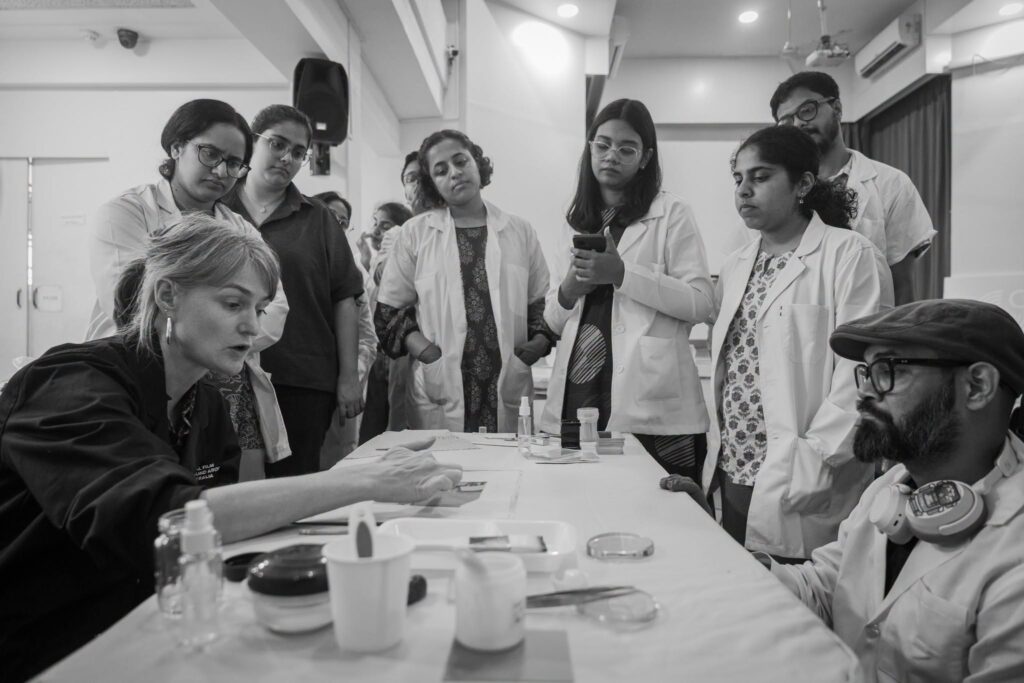
In the paper and photograph conservation sessions, participants will learn to identify and assess various forms of deterioration affecting paper and photographic materials, supported by thorough condition reporting and documentation practices. The training incorporates hands-on instruction in safe handling, surface cleaning, stabilisation, and repair, alongside techniques for mould remediation and prevention. Participants will also explore appropriate storage and environmental strategies to minimise ongoing degradation and support long-term preservation. Emphasis is placed on conservation ethics, sustainable decision-making, and an understanding of material integrity to guide appropriate levels of intervention.
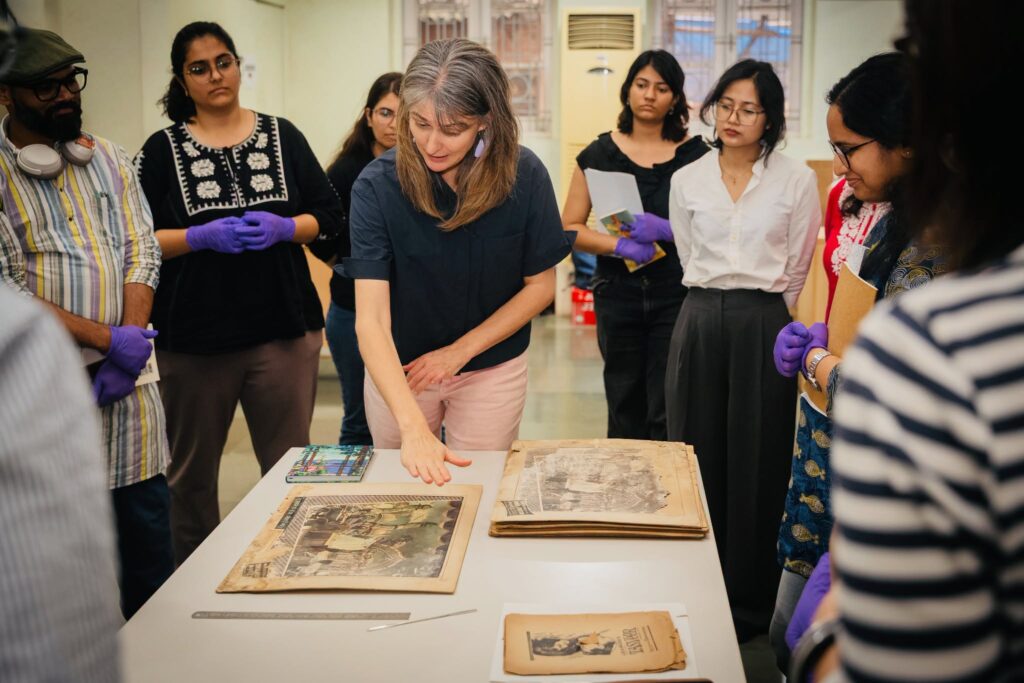
Date: August 20, 21 and 22, 2026
Venue: Goethe-Institut / Max Mueller Bhavan Mumbai
The K. R. Cama Oriental Institute, 136, Bombay Samachar Marg, Opposite Lion Gate, Fort, Mumbai – 400023
Time:
August 20, 2026 – 9:00 AM to 5.30 PM
August 21 and 22, 2026 – 10.00 AM to 5.30 PM
Application closed on July 15, 2026.
The Expert Faculty

Dr. Sophie Lewincamp
Dr. Sophie Lewincamp is the Head of Conservation and Collection Management at the National Film and Sound Archive of Australia (NFSA), and Honorary Lecturer at The Centre for Heritage and Museum Studies, Australian National University. Sophie has over twenty years’ experience in the field of materials conservation, project management and community collaboration working in industry and academic organisations.
Sophie holds a PhD in Cultural Materials Conservation from The University of Melbourne, and Bachelor of Applied Science majoring in Cultural Materials Conservation from the University of Canberra. Dr Lewincamp is qualified paper conservator and has extensive experience treating and managing different collections, as well as working with communities to care for their collections.
She has taught conservation Masters students at the Grimwade Centre for Cultural Materials Conservation, University of Melbourne (2010-2018) and delivered collection care training with communities.

James Campbell
James Campbell is the Team Leader of the Audiovisual Conservation Section at the National Film and Sound Archive of Australia (NFSA). James has over eight years’ experience working with Australian film collections. He has contributed to the preservation of moving image materials at the National Film and Sound Archive of Australia and the Australian War Memorial. James currently guides the NFSA’s AV Conservation team, overseeing both routine and complex film conservation work, and is deeply committed to research that advances solutions to both longstanding and emerging challenges in film preservation.

Dieter Schmid
Dieter Schmid is currently the Film Services Technical Lead at the National Film and Sound Archive. Dieter has been a member of the Film Services team since 2018 and has experience of all aspect of the film digitisation workflows including cleaning, scanning and colour grading.
As the Technical Lead, Dieter provides technical support to the Film Services team including multiple scanners and post production workstations.
Dieter provides high end colour grades to NFSA collection items and has been involved with titles such The Cars That Ate Paris, Muriels Wedding and The Adventures of Priscilla, Queen of the Desert for the NFSA Restores programme as well as restoring the film clip of Helen Reddy’s I Am Woman in celebration of the song’s 50th anniversary.
Our Collaborator
The National Film and Sound Archive of Australia
The National Film and Sound Archive of Australia (NFSA), is Australia’s audio-visual archive, responsible for developing, preserving, maintaining, promoting, and providing access to a national collection of film, television, sound, radio, video games, new media, and related documents and artefacts. The collection ranges from works created in the late nineteenth century when the recorded sound and film industries were in their infancy, to those made in the present day.
Our Supporters
The Centre for Australia-India Relations
The Centre for Australia-India Relations is a national platform established by the Australian Government in 2023 to support and facilitate greater collaboration and engagement with India.
The Centre works across all levels of government, industry, academia and civil society to build greater understanding of the Australia-India relationship and the opportunities flowing from our burgeoning connections.

Tata Trusts
Established in 1892, the Tata Trusts are India’s oldest and amongst Asia’s largest philanthropic institutions.

They have played a pioneering role in bringing about an enduring difference in the lives of the communities they serve, advancing equity, resilience, and shared progress. Inspired by the vision of the Founder Jamsetji Tata and guided by a legacy of proactive philanthropy, the Tata Trusts work to catalyse systemic and sustainable change across diverse areas by building institutions, strengthening public systems, and accelerating socio-economic development in a wide variety of areas- healthcare; nutrition; education; water, sanitation and hygiene; urban and rural livelihoods, amongst others. The Trusts build meaningful solutions, bridging tradition and innovation, through collaborations that nurture grassroots efforts, empower change makers, and touch lives across India.
One of the key focus areas of the Arts and Culture portfolio is working in the field of conservation – art conservation, built heritage conservation and film preservation. The practice of film preservation in India is at a nascent stage, one that the Trusts, are happy to support in offering training opportunities in a bid to not only help preserve India’s vast cinematic heritage, but to also help generate employment opportunities in this field.
For more information please visit: www.tatatrusts.org
Our Venue Partner
Goethe-Institut / Max Mueller Bhavan Mumbai
The Goethe-Institut is the Federal Republic of Germany’s cultural institution operational worldwide. We promote the study of German abroad and encourage international cultural exchange. We also foster knowledge about Germany by providing information on its culture, society and politics.