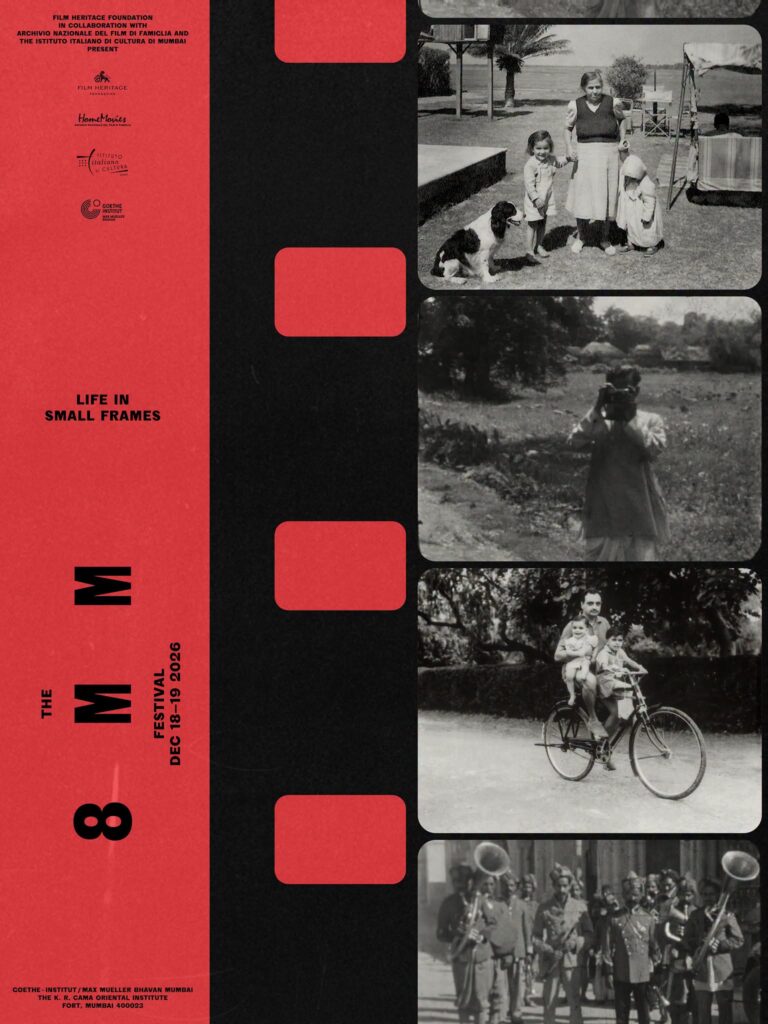


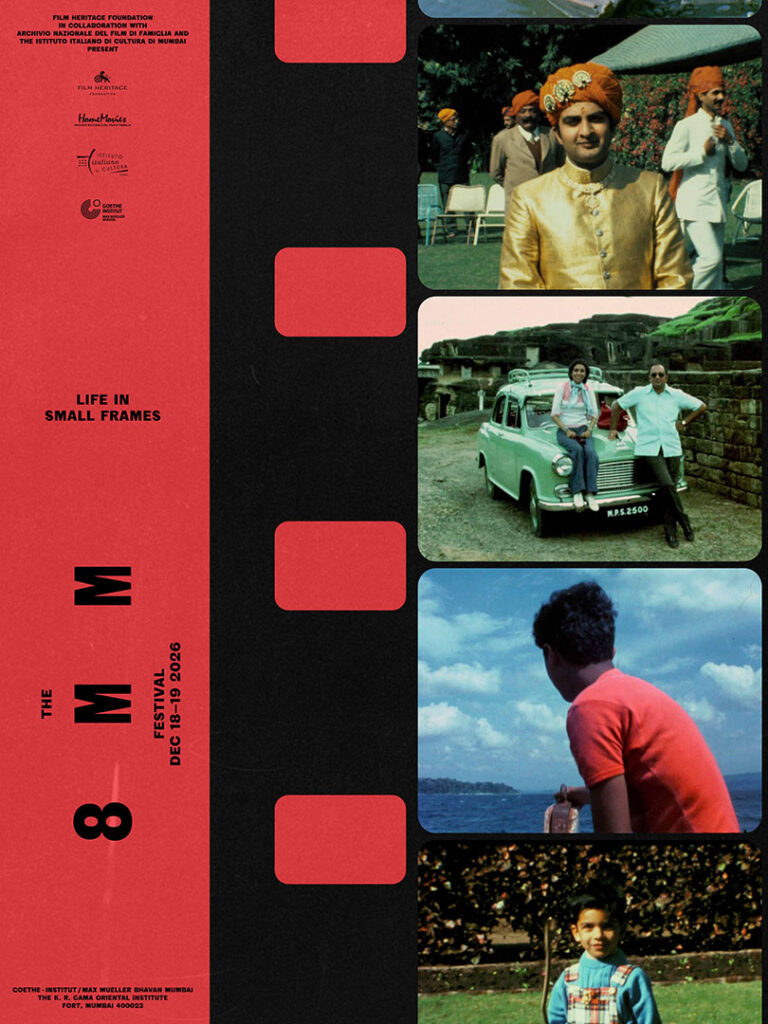
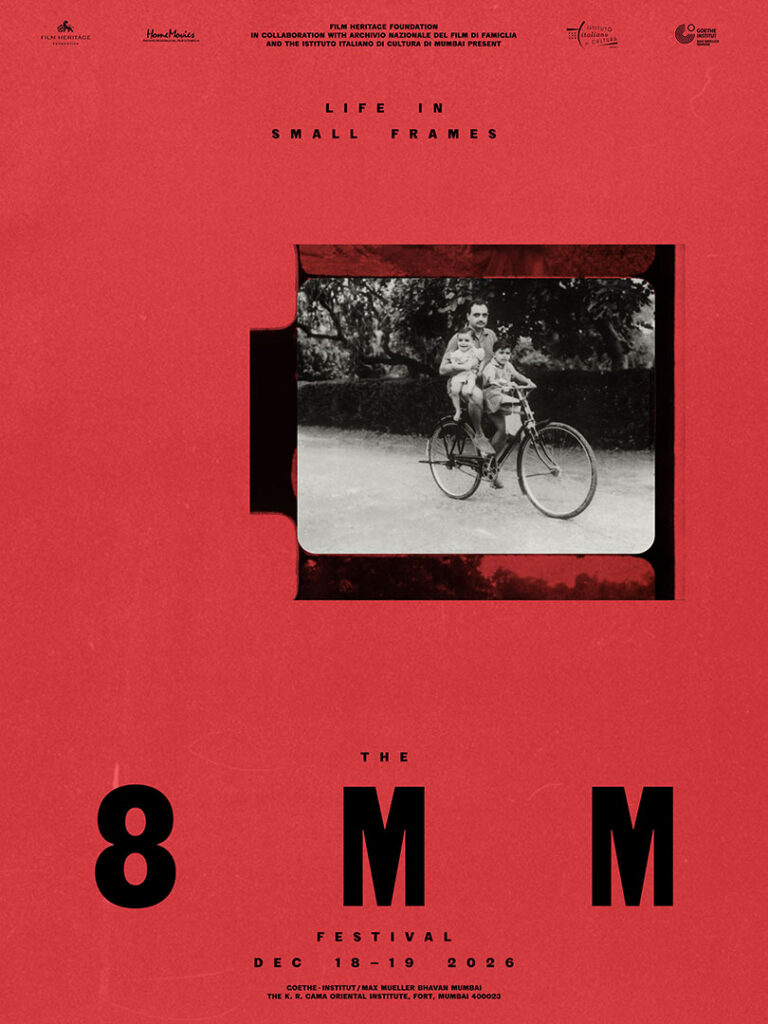
Film Heritage Foundation in collaboration with Archivio Nazionale del Film di Famiglia in Bologna and the Istituto Italiano di Cultura di Mumbai will conduct The 8MM FESTIVAL – LIFE IN SMALL FRAMES – a unique festival-cum- workshop centred around the preservation and exhibition of 8MM and Super 8 films in Mumbai on December 18 & 19, 2026.
“The 8MM FESTIVAL – LIFE IN SMALL FRAMES” represents a vital bridge between international archival standards and the vibrant local history of India. By adopting the “Archivio Aperto” methodology, the programme will provide local archivists with the specific tools and conceptual frameworks needed to manage the unique challenges of amateur film. This festival does more than project images; it establishes a sustainable model for heritage preservation that empowers the community to protect its own fragile, small-gauge records, ensuring they remain a living part of the city’s cultural identity.
The 8MM FESTIVAL has been imagined as festival-cum-workshop over two days on December 18 & 19, 2026 for a maximum of 20 participants. Day 1 of the festival will be focused on a workshop taught by experts from the Archivio Nazionale del Film di Famiglia in Bologna that will cover the care and preservation of 8 mm films. On Day 2 the selected films will be projected on an 8 mm projector with each participant presenting and speaking about the history behind their films.
8MM FILM – ARCHIVING DAILY LIFE
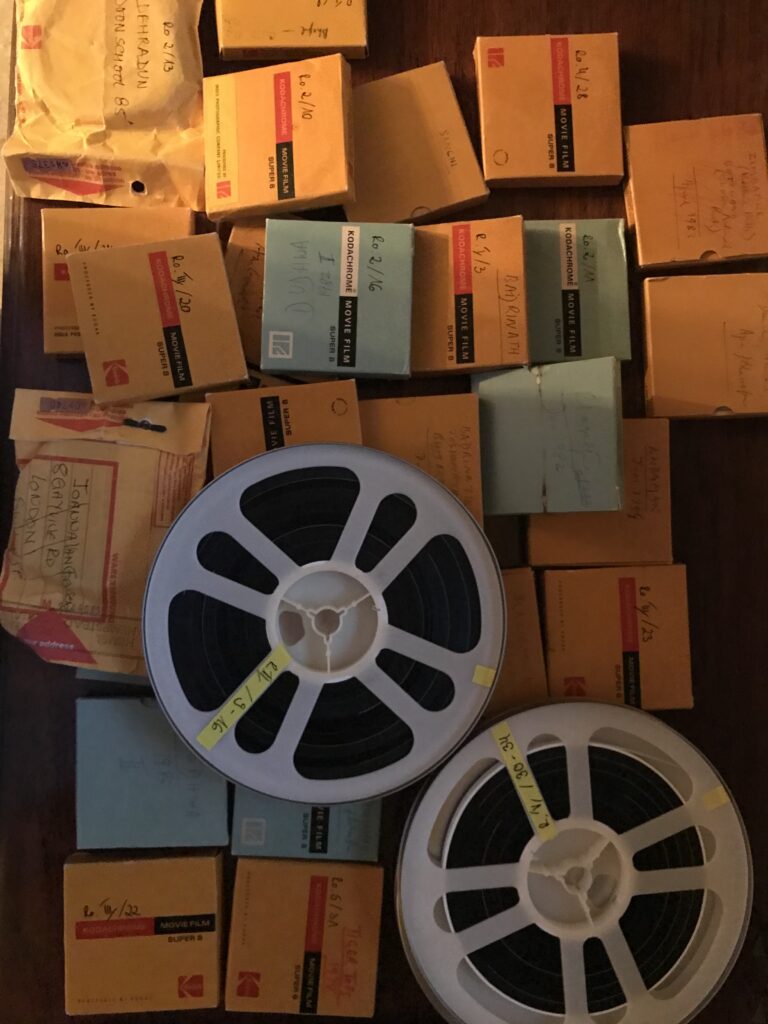
8MM and Super 8 cameras were the mobile phones and Handycams in the era of celluloid capturing memories and important moments of our day to day lives from weddings, graduations and holidays to just a day spent at home with family and friends.
Historically, home movies shot by amateurs on small gauge 8mm and Super 8, have been overshadowed by the romance and drama of cinema, of stories told on the big screen, rarely being given the importance they deserve as important chroniclers of quotidian life.
Home movies are particularly significant because they document forms of experience that conventional historical archives have frequently overlooked. Birthdays, holidays, domestic rituals, children’s games, family gatherings, journeys, and moments of leisure rarely appear in official records. Yet these apparently insignificant events constitute much of the texture of everyday life. Small gauge film and 8 mm cameras allowed people to capture moments of daily life that could be shared with family and friends and future generations.
In 1932, when Kodak introduced 8 mm film, it created a revolution of sorts as it enabled almost everyone to make their own films. The format was smaller, cheaper, and easier to handle than earlier motion-picture film. It quickly became popular among amateur filmmakers. Families could purchase a camera, record a few minutes of footage, have the film processed, and later watch it at home using a small projector. Super 8, introduced by Kodak in 1965, further simplified amateur filmmaking and became one of the most recognizable formats associated with family movies.
AIM OF THE PROGRAMME
- Training a new generation of students, filmmakers and archivists in the specialized methodologies required to preserve and restore 8mm and Super8 film formats.
- Actively engaging the participants in the identification and safeguarding of their own visual histories, fostering a sustainable culture of local film preservation.
- Showcasing the significance and beauty of small-gauge film capturing life in small frames.
SCHEDULE
DAY 1 – DEC 18, 2026 – WORKSHOP: SMALL-GAUGE FORMATS – FROM RECOVERY TO VALORISATION
In this session, participants will be taken through the entire lifecycle of amateur and private film heritage according to the Home Movies methodology.
| Time Slot | Activity |
| 9:30 AM – 10 AM | Registration |
| 10:00 AM – 11:15 AM | Archiving & Preservation: Recovery and digitization of amateur reels. |
| 11:15 AM – 11:30 AM | Tea/coffee break |
| 11:30 AM – 1:15 PM | Context & Oral History: How to combine archival reels with family testimonies, interviews, and documentation to turn private films into historical sources. |
| 1:15 PM – 2:15 PM | Lunch break |
| 2:15 PM – 3:30 PM | Methodologies for the restoration and physical handling of amateur film. Valorisation & Access: How an amateur film leaves the private sphere to become shared heritage through festival programming, web archives, artistic reuse, and educational projects. |
| 3:30 PM – 3:45 PM | Tea / coffee break |
| 3:45 PM – 5:45 PM | Film inspection sessions of participants’ 8mm and S8 reels for professional evaluation using specialized viewers. |
| 6:00 PM | Screening of films from the Archivio Nazionale del Film di Famiglia collection |
DAY 2 – DEC 19, 2026 – FESTIVAL: LIVE SCREENINGS OF PARTICIPANTS’ FILMS
The second day of the festival will be dedicated to screening the participants’ films on 8mm projectors with each film being presented by the participant.
| Time Slot | Activity |
| 10:00 AM – 11:15 AM | Live screening of participants’ films on 8mm projector |
| 11:15 AM – 11:30 AM | Tea / coffee break |
| 11:30 AM – 1:15 PM | Live screening of participants’ films on 8mm projector |
| 1:15 PM – 2:15 PM | Lunch break |
| 2:15 PM – 4:15 PM | Live screening of participants’ films on 8mm projector |
| 4:15 PM – 4:30 PM | Tea/coffee break |
| 4:30 PM – 6:30 PM | Live screening of participants’ films on 8mm projector |
WHO CAN APPLY?
Anyone who has 8mm or Super 8 films. You could have shot films on 8mm or Super 8 yourself or found them in a flea market or maybe your father or grandfather recorded a family summer holiday or a wedding. We are looking for films that capture everyday life in small frames.
You will need to submit an application form with the synopsis and some images from your film. 20 participants will be selected by the Film Heritage Foundation team.
Selected participants will be informed by November 10, 2026 after which you will need to send your films to Film Heritage Foundation to be inspected and checked by our conservators.
Click here to apply:https://forms.gle/Cp4M2QULp4da2Gz48
EXPERT FACULTY
Paolo Simoni – Co-founder and Director of Archivio Nazionale del Film di Famiglia (National Family Film Archive). He has conceived and produced numerous projects for the recovery and enhancement of Italian private audiovisual heritage. Since 2009, he has collaborated with Kine on the production of documentary films using private archive materials. He holds a PhD in Cultural Heritage from the Politecnico di Torino, has held research and teaching positions across several Italian universities and is the author of essays on amateur and experimental cinema.

Mirco Santi – Co-founder of Archivio Nazionale del Film di Famiglia (National Family Film Archive). He has extensive experience in the preservation, technical restoration and digitization of small-gauge film formats (8mm, Super 8, 9.5 mm, 16mm).He has a PhD in Film and Audiovisual Studies from the University of Udine and is a university lecturer in film restoration. He is the former President of the INEDITS European Association.
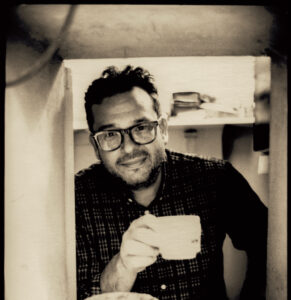
Ilaria Ferretti – Archive manager at Archivio Nazionale del Film di Famiglia (National Family Film Archive) specializing in the management and enhancement of audiovisual archives. She holds a PhD in Communication, Markets and Society from IULM University in Milan.

COLLABORATORS

ARCHIVIO NAZIONALE DEL FILM DI FAMIGLIA (NATIONAL FAMILY FILM ARCHIVE)
The Home Movies Foundation – National Family Film Archive is the first archive in Italy entirely dedicated to the preservation, restoration, and promotion of private film and audiovisual heritage and amateur cinema: a legacy of immeasurable historical, social, and cultural value.
To date, the Foundation preserves in its spaces more than 40,000 films in reduced formats 9.5mm, 16mm, 8mm, Super8 and on other audiovisual memory recording media, originating from all over the country and acquired through donations from citizens or broader collection projects in collaboration with public and private entities.